

Last updated: July 2026
You’ve got a week or two off, boots finally broken in, and one stubborn decision left: Everest Base Camp or Annapurna Base Camp? Both are bucket-list treks that don’t require technical climbing experience, both end at the foot of some of the most photographed mountains on Earth — and yet they’re genuinely different trips. Here’s the honest, round-by-round breakdown, from a team that runs departures on both routes every week out of our office in Satghumti, Thamel.

🥊 Round 1: The Views — Vertical Giants vs. The Amphitheater
Everest Base Camp: Vertical Giants
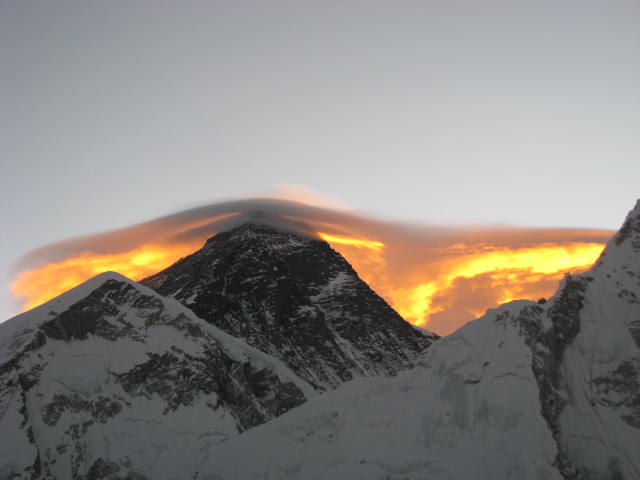
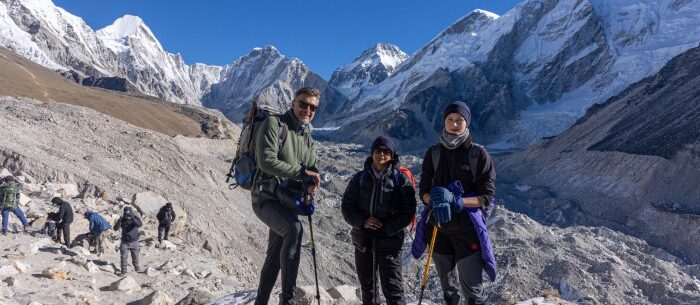
From day three onward, you’re walking through a high-altitude bowl surrounded by names out of mountaineering history — Lhotse, Nuptse, Ama Dablam, and Everest itself. The scale here is genuinely humbling.
The highlight: sunrise from Kala Patthar (5,545m), watching the summit turn gold.
Annapurna Base Camp: The Amphitheater
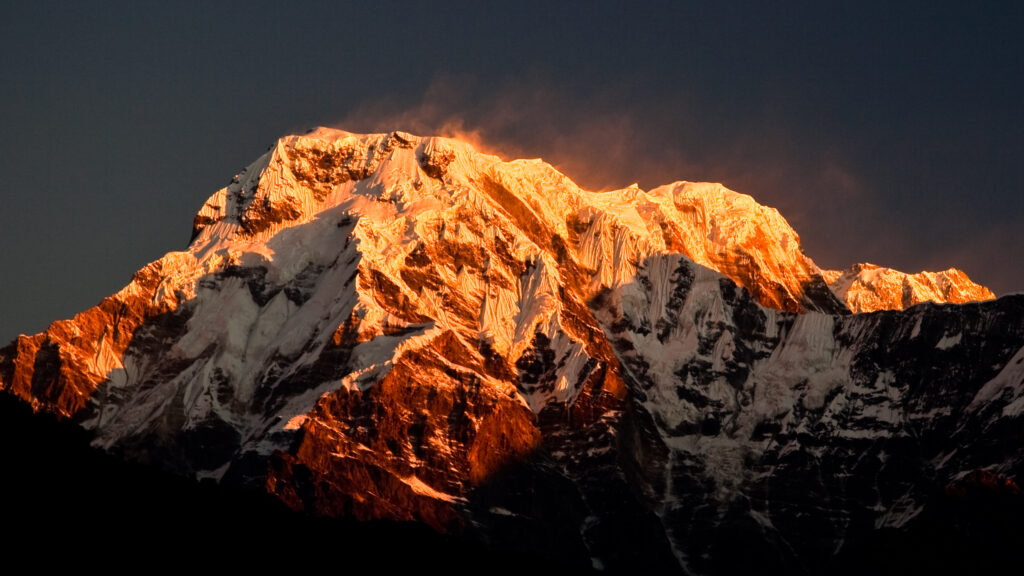
ABC’s whole trek builds toward one moment: walking into the Annapurna Sanctuary, a natural amphitheater ringed by Annapurna I, Machapuchre (Fishtail), Annapurna South, and Hiunchuli, all rising almost straight up from the valley floor around you. Fewer big names than Everest’s lineup, but arguably a more dramatic, enclosed reveal.
The highlight: waking up at Annapurna Base Camp itself (4,130m) as dawn light hits the entire ring of peaks at once — it’s a 360° payoff, not a single summit view.
Verdict: Want the world’s highest peak and its famous neighbors? Everest. Want a tighter, more theatrical mountain panorama in half the time? Annapurna Base Camp.
🥊 Round 2: Culture — Sherpa Heartland vs. Gurung Hill Villages
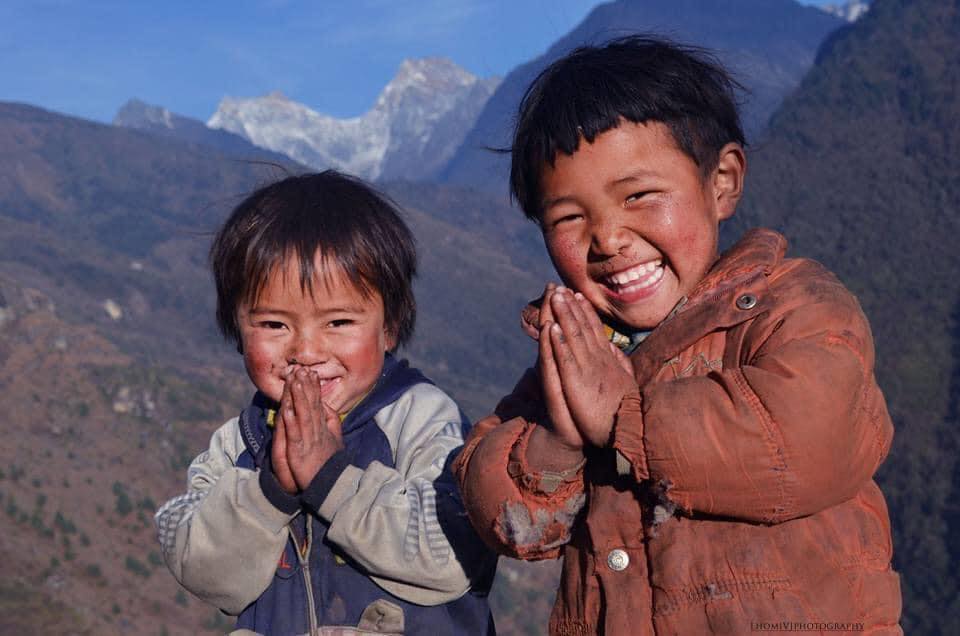
The Khumbu is Sherpa homeland, and the culture is inseparable from Tibetan Buddhism — mani stones, prayer wheels at every bridge, the deep horns of Tengboche Monastery echoing down the valley. It feels less like a trek and more like a mountaineering pilgrimage.
ABC runs through Gurung and Magar hill villages — Ghandruk and Chhomrong are the standouts, with stone-paved streets, terraced fields, and some of the best hospitality in the Annapurna region. It’s a gentler cultural introduction than the Khumbu’s monastery-heavy route, but no less warm.
Verdict: Everest for deep Buddhist mountaineering culture. ABC for classic Gurung hill-village hospitality.
🥊 Round 3: Getting There — The Lukla Flight vs. The Pokhara Drive
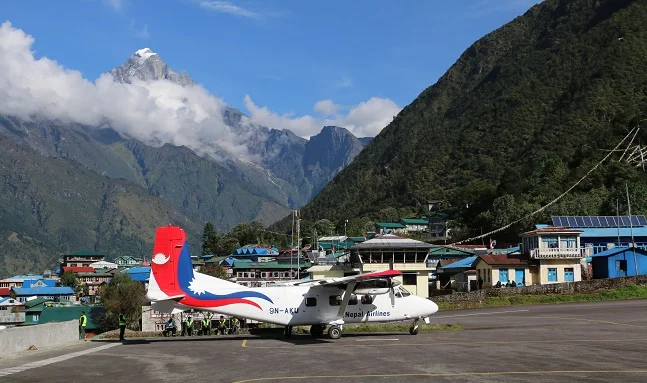
Most Everest trekkers fly from Kathmandu (or Ramechhap in peak season) into Lukla — just 35 minutes in the air, but mountain weather is fickle, and grounded flights can throw off a tight itinerary fast.
ABC starts with a scenic flight or drive from Kathmandu to Pokhara, then a short drive to Nayapul or Kimche to hit the trailhead. No small-plane gamble at all — just a comfortable, reliable start to the trek.
Verdict: Everest is more dramatic getting in, but weather-dependent. ABC is the far more reliable, lower-stress option if your schedule is tight.
🥊 Round 4: Difficulty, Altitude, and Duration
| Feature | Everest Base Camp Trek | Annapurna Base Camp Trek |
|---|---|---|
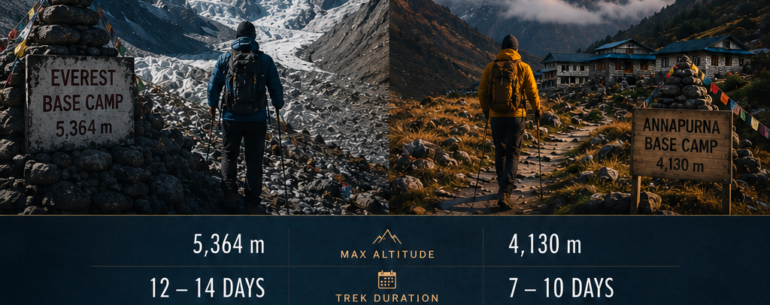
| Max elevation | 5,545m (Kala Patthar) / 5,364m (EBC) | 4,130m (Annapurna Base Camp) |
| Typical duration | 12–14 days | 7–10 days |
| Days above 4,000m | 5–6 days | 1–2 days |
| Terrain | Steep, rocky, constant up-and-down | Forest and bamboo trails, steady climb into alpine terrain |
Verdict: ABC is meaningfully shorter and lower, with far less sustained altitude exposure — a real option if you’re short on time or new to high-altitude trekking. Everest demands more days, more altitude, and more preparation.
🥊 Round 5: Cost, Permits, and Crowds
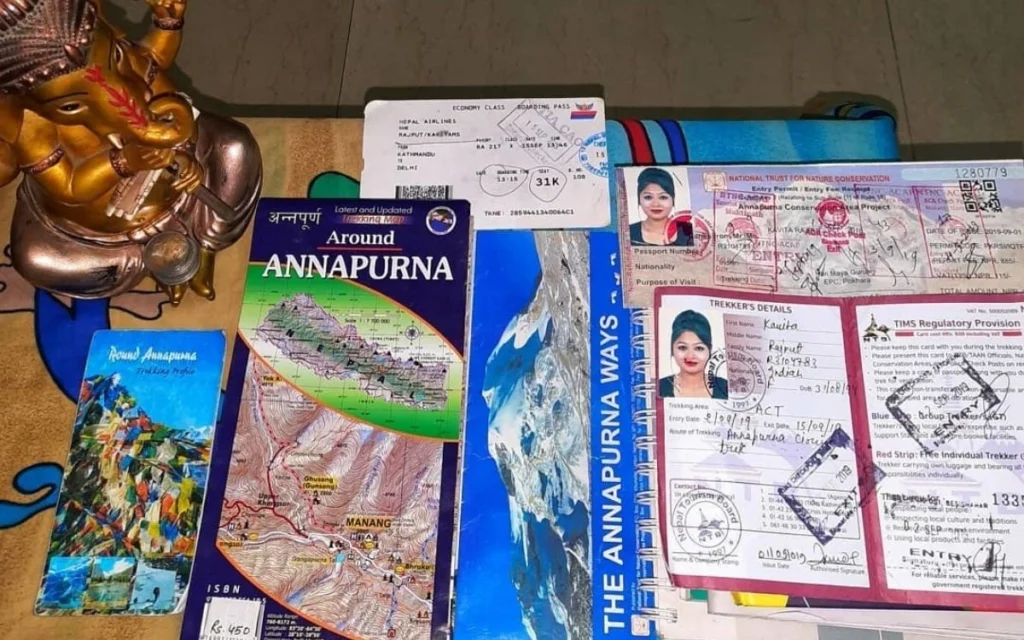
Everest requires the Khumbu Rural Municipality Permit plus a Sagarmatha National Park entry permit. ABC needs just the Annapurna Conservation Area Permit (ACAP) — see our Nepal Trekking Permits Guide for the full breakdown.
On cost, ABC is typically the more budget-friendly of the two — shorter duration, no Lukla flight, and lower teahouse prices along the route. Full numbers in our Nepal Trekking Cost Guide.
Both get busy in autumn (Sept–Nov) and spring (Mar–Apr), but ABC’s lower altitude keeps it workable across a slightly wider window, including much of winter at a gentler pace. Our Best Time to Trek in Nepal Guide breaks down exactly which months suit each route best.
Can You Just Do Both?
Yes — plenty of trekkers do, just not on the same trip. ABC works well as a shorter, lower-altitude introduction before tackling Everest later, or as its own standalone trip if time is tight. There’s no wrong first choice here, only a first one.
The Ultimate Verdict: Which One Should You Book?
Go with Everest Base Camp if: you want to stand at the base of the world’s highest peak, you’re drawn to mountaineering history, you want to see the Khumbu Icefall, and you have the time and fitness for sustained high-altitude trekking.
Go with Annapurna Base Camp if: you’re short on time, you’d rather ease into high-altitude trekking than push hard into it, you want a dramatic mountain panorama without the Lukla flight risk, and you’re looking for a gentler introduction to the Himalayas.
Frequently Asked Questions
Which is harder — EBC or ABC?
Everest Base Camp is harder overall: more days, higher altitude, and more consecutive days above 4,000m. ABC is a genuinely good option for first-time high-altitude trekkers.
Which is cheaper, EBC or ABC?
ABC is typically less expensive — it’s shorter, skips the Lukla flight, and has slightly lower teahouse costs along the way.
Can a beginner do EBC, or should they start with ABC?
ABC is a solid starting point for someone new to trekking or altitude. EBC is still achievable for fit beginners with a sensible acclimatization schedule, but it asks more of you.
Do I need a guide for either trek?
Current regulations increasingly favor licensed guides on both routes — see our [LINK: Nepal Trekking Permits Guide] for the latest requirements.
How many days do I need for each?
EBC typically runs 12–14 days round trip; ABC is usually 7–10 days, making it the better fit if your time off is limited.
Let Cold Feet Handle the Details
Whichever trail is calling your name, our team handles the guide assignments, permit clearances, and transport logistics right out of our Thamel office. Stop by for a cup of tea and let’s get your Himalayan adventure on the books — or chat with our local guides on WhatsApp if you’ve got questions about available dates.
Leave a Reply