
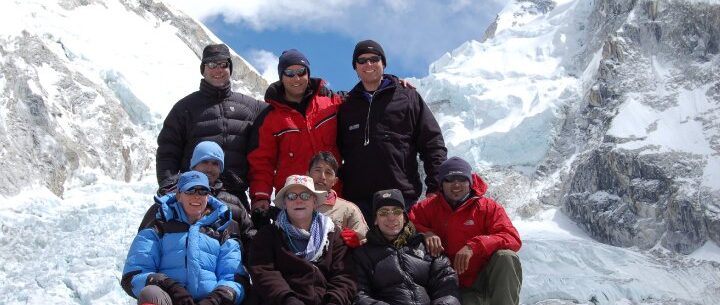

Everything you need to budget for the Everest Base Camp trek — from permits and flights to trail expenses, tipping, and the hidden costs most guides never mention.
The Price of a Dream
Every Everest journey begins long before you lace up your boots in Lukla. It begins with a question: can I actually afford this?
Type “Everest Base Camp trek cost” into a search engine and you’ll quickly find yourself drowning in contradictions. One traveller claims they completed the trek for less than $900 USD. Another agency advertises a “luxury experience” for over $4,500 USD. Social media only adds to the confusion, with polished videos that rarely mention the practical realities behind the adventure.
So what does an Everest Base Camp trek really cost in 2026?
For most international travellers booking with a reputable local operator, a fully supported 14 to 16-day trek typically costs between $1,300 and $2,400 USD, depending on comfort level, group size, accommodation standards, and transport options. The number itself, however, only tells half the story.
Everest has a way of introducing expenses you never considered while planning from home. The higher you climb into the Khumbu Valley, the more ordinary things become extraordinary luxuries — a hot shower, a charged phone, a reliable internet connection, even a simple chocolate bar costing several times what it does in Kathmandu. None of this is unreasonable: every bottle of gas, sack of rice, solar panel and chocolate bar has travelled to the mountains by porter, yak, helicopter or small aircraft. The further from the road network, the more remarkable — and expensive — the logistics become.
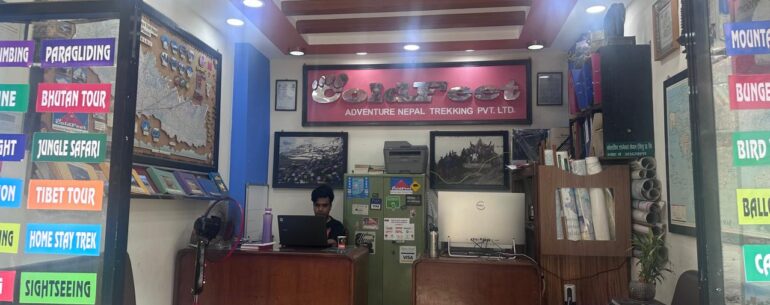
At Cold Feet Adventure, we believe transparency matters as much as preparation. Our guides spend every trekking season on these trails, and we’ve seen too many travellers arrive with unrealistic budgets built from outdated blogs. This guide goes beyond package prices to explain every major expense you’ll encounter — permits, Lukla flights, Wi-Fi cards, teahouse charging fees, tipping etiquette, and the small trail costs that quietly add up over two weeks in the Himalayas. Our goal isn’t just to tell you what the trek costs — it’s to help you understand why it costs what it does.
Everest Base Camp Trek Cost at a Glance (2026)
If you want the quick answer before the details:
| Expense | Typical Cost (USD) |
|---|---|
| Guided Everest Base Camp Package | $1,300–2,400 |
| Trail Spending Money | $250–400 |
| Travel Insurance | $100–250 |
| Guide & Porter Tips | $150–300 |
| Personal Gear (if needed) | $150–600 |
Recommended total budget: approximately $1,800–2,800 USD, depending on travel style, existing equipment, and comfort preferences.
Cold Feet Note
The cheapest Everest trek isn’t always the most affordable. Low-cost packages often exclude permits, airport transfers, domestic flights, porter services, meals, or accommodation upgrades — by the time these “extras” are added, many travellers end up spending more than they expected. Before comparing prices, compare what’s actually included.
What We’ll Cover
This guide follows the journey in the order you’ll experience it: the non-negotiable costs (permits, park fees, domestic flights, current regulations), then the everyday expenses that surprise most first-time trekkers (food, charging, Wi-Fi, showers, tipping), and finally a realistic total budget — because the only surprises on an Everest trek should be the mountains themselves.
Part I— The Non-Negotiables: Permits, Guides & Getting to the Mountain
Before your boots touch the trail, before you hear the bells of Namche Bazaar or catch your first glimpse of Ama Dablam, there are several costs every Everest trekker has to account for. These aren’t optional upgrades — they’re the price of entering one of the world’s most protected mountain landscapes. Fortunately, they’re also the easiest costs to budget, since they rarely change through the season.
1. Entering the Khumbu: The Required Permits
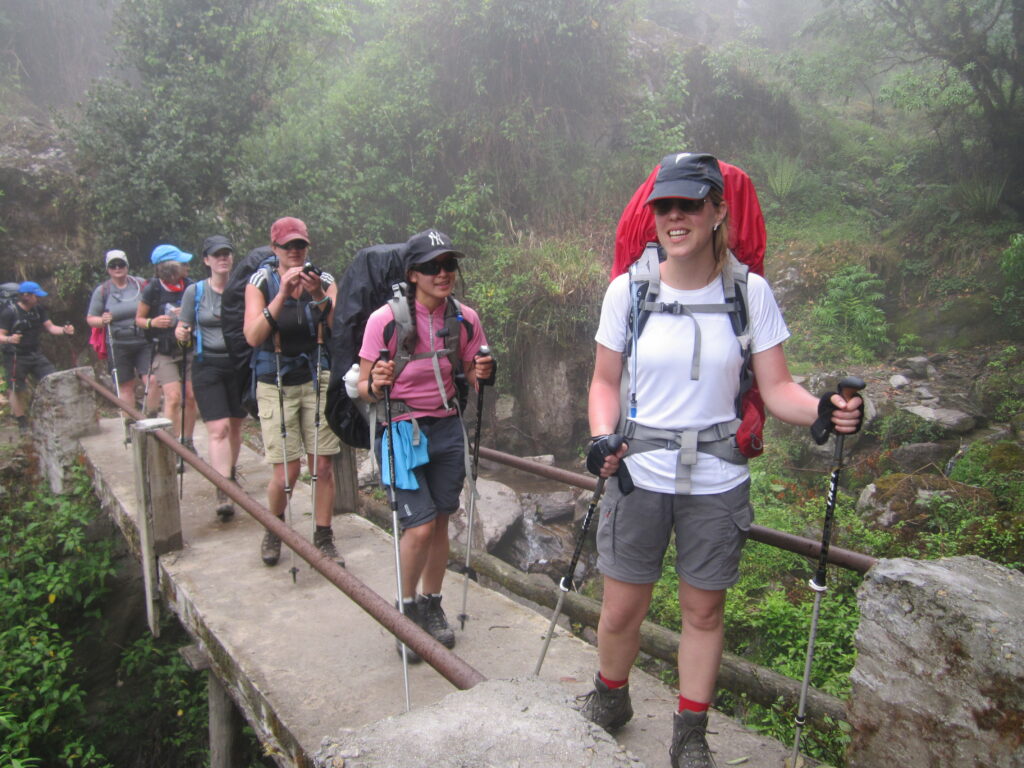
Everest Base Camp lies inside both a protected national park and a locally administered municipality, and every visitor contributes to trail maintenance, conservation, rescue infrastructure and community development through a permit system. If you’re trekking with a licensed local operator, permits are usually arranged before your journey begins; independent trekkers with only a guide purchase them at official checkpoints.
Khumbu Pasang Lhamu Rural Municipality Permit — NPR 2,000 (approx. USD 15). This replaced the former TIMS card within the Everest region and supports the local municipality responsible for trails, bridges, waste management and tourism infrastructure. Unlike older permits, this fee stays within the region. Most visitors receive it shortly after arriving in Lukla.
Sagarmatha National Park Entry Permit — NPR 3,000 + VAT (approx. USD 30). Shortly after leaving Monjo you’ll reach the entrance to Sagarmatha National Park, a UNESCO World Heritage Site protecting one of the planet’s most extraordinary alpine ecosystems. Rangers inspect permits before allowing trekkers to continue toward Namche Bazaar and the higher valleys — these fees fund wildlife conservation, trail maintenance and visitor management throughout the park.
Cold Feet Note: Permits aren’t simply administrative paperwork. They help maintain suspension bridges, protect fragile ecosystems, and fund local infrastructure — every permit purchased contributes directly to preserving the region you’re visiting.
2. The Guide Requirement: What Changed?
One of the biggest misconceptions about Everest Base Camp comes from outdated travel blogs. If you’ve read older articles claiming independent trekking was common and inexpensive, that advice no longer reflects today’s reality. To improve mountain safety and reduce avoidable rescue incidents, Nepal now requires international trekkers in most major regions to travel through an authorised trekking agency with a licensed guide.
Far from being a restriction, an experienced guide is often the most valuable investment you make. Long before altitude sickness becomes dangerous, a good guide notices subtle changes in your breathing, pace and energy. They know which teahouses are most reliable, communicate directly with lodge owners, and adjust the itinerary when conditions demand it. In the Himalayas, local knowledge isn’t a luxury — it’s part of your safety system.
3. What Should a Good Trek Package Actually Include?
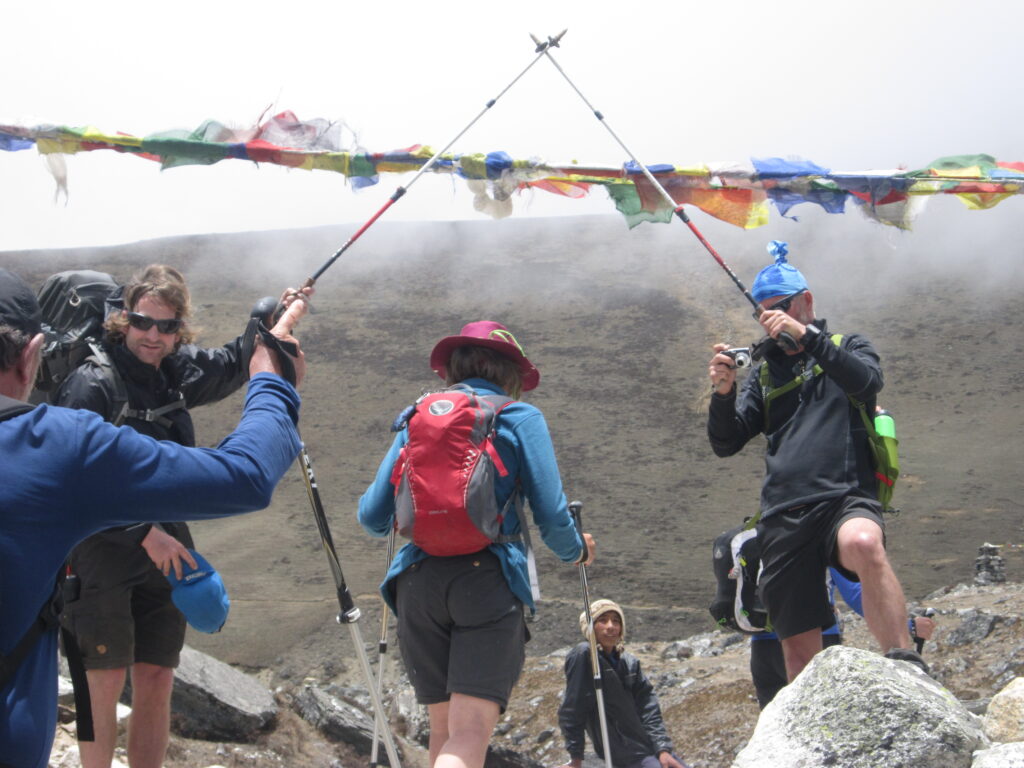
One reason Everest prices vary so dramatically is that itineraries don’t all include the same services. A package advertised at $1,000 may look cheaper than one at $1,700 — until domestic flights, permits, accommodation, porter support and meals are added separately, at which point the totals often end up surprisingly close. A comprehensive package should clearly include:
- Domestic flights to and from Lukla (or seasonal alternatives)
- All required trekking permits
- Licensed English-speaking guide
- Experienced porter support
- Accommodation throughout the trek
- Three meals per day
- Airport transfers
- Government taxes and service charges
If these aren’t clearly listed, ask — a reputable company should never hesitate to explain exactly what you’re paying for. At Cold Feet Adventure, transparency isn’t an upgrade, it’s our operating philosophy: every quotation is designed so you understand the full cost before leaving Kathmandu.
Part II — The Hidden Costs Nobody Talks About
Most trekkers budget for flights, permits and accommodation. Very few budget for the small things — and ironically, those small things are often what surprise people most.
Somewhere after Namche Bazaar, prices start changing along with the scenery. A soft drink that costs under a dollar in Kathmandu suddenly costs four. Charging your phone becomes a paid service. A hot shower starts to feel like a hotel amenity. None of this is anyone trying to overcharge you — it’s because every solar panel, gas cylinder, sack of rice and chocolate bar had to be carried into one of the most remote inhabited valleys on Earth, usually on someone’s back.
Trail Reality: Nothing is expensive because it’s Everest. Everything is expensive because everything has to reach Everest. Once you understand the logistics, the prices make sense.
The $5 Shower That Everyone Eventually Stops Taking
Lower on the trail, especially around Phakding and Namche Bazaar, hot showers are relatively common. Higher up, heating water gets harder — firewood is protected, gas is flown or carried in, and solar heating depends on the weather.
Typical cost is $4–8 per shower, rising with altitude. By Dingboche or Lobuche, many experienced trekkers quietly stop showering altogether — not to “rough it,” but because the air is dry, the temperature is freezing, hair barely dries before dinner, and there’s another seven hours of walking tomorrow anyway.
Cold Feet Note: Wet wipes become one of the most valuable items in your pack — lightweight, inexpensive, and after a few days above 4,000 metres you’ll understand why experienced trekkers never leave Kathmandu without them.
Electricity Isn’t Free at 5,000 Metres
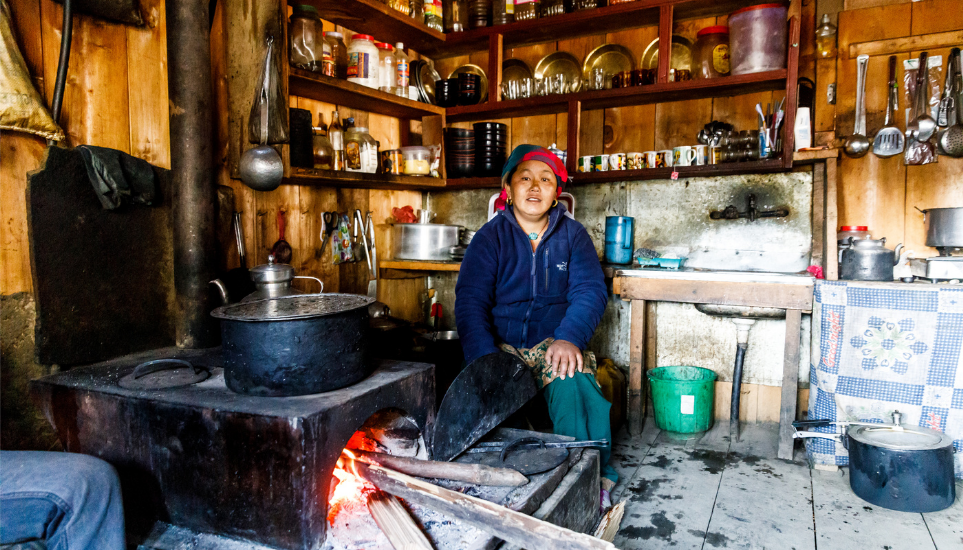
Most teahouses rely on small hydroelectric systems or solar panels, so available power shifts with the weather. Charging stations are usually in the communal dining room rather than individual rooms, and each device is charged separately.
- Phone: $2–5
- Camera batteries: $3–5
- Large power bank: $5–10
It doesn’t sound like much until you realise you’ll repeat this process several times during the trek.
The Best $40 You’ll Spend Before Flying to Nepal: Buy a quality 20,000mAh power bank before arriving — not because charging is impossible, but because independence is worth carrying. It lets you photograph sunrises without watching your battery percentage, navigate safely, and reach family whenever Wi-Fi appears. Keep it inside your sleeping bag at night; lithium batteries dislike cold as much as trekkers do.
Wi-Fi Above the Clouds
Yes, you can upload an Instagram story from Everest Base Camp. Whether it uploads successfully is another question. Internet across much of the Khumbu relies on a satellite network called Everest Link — coverage has improved a lot over the past decade, but mountain weather still determines reliability. On a clear afternoon it works surprisingly well; during heavy snow or strong wind, even a text message can take patience.
- Everest Link data card: approx. $20
- Individual teahouse access: $3–5
Many trekkers buy a single data package and use it sparingly. Others embrace something rarer: being offline.
From the Trail: One of the unexpected gifts of the Everest trek is discovering how quickly you stop reaching for your phone. When the world’s highest mountains are your view every morning, notifications start to feel surprisingly unimportant.
The Most Expensive Chocolate Bar You’ll Ever Buy
By the time you reach Gorak Shep, a standard chocolate bar can cost $4–5 — a can of Pringles, a soft drink, even instant coffee, all dramatically more than a few days earlier. Again, not because anyone’s exploiting tourists — because somebody physically carried it there, by yak, porter, or helicopter. Logistics create the prices; altitude just magnifies them.
Dal Bhat: The Best Value on the Mountain
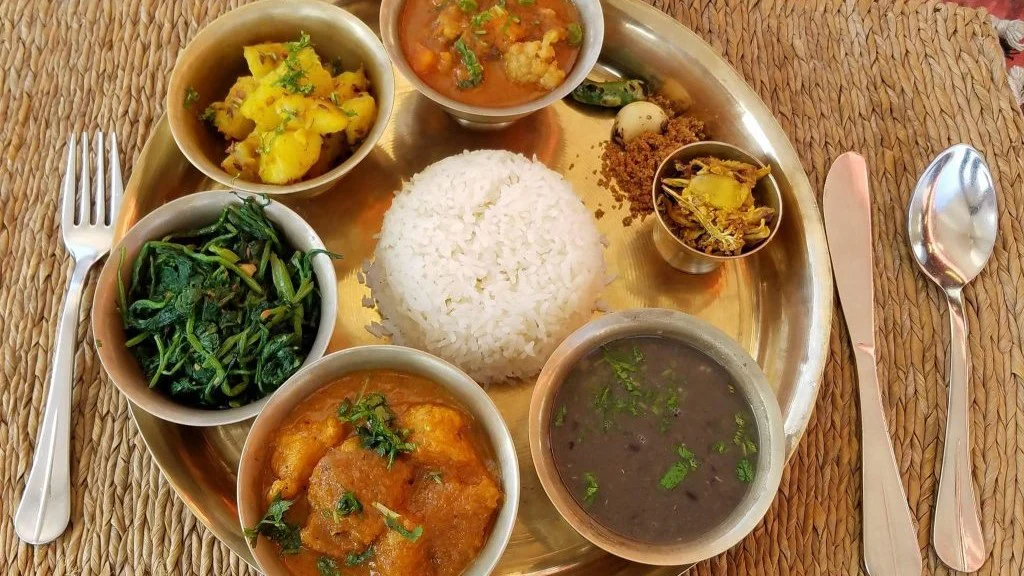
Ask almost any experienced guide what to eat on the trail and you’ll probably hear the same answer: dal bhat. Nepal’s traditional meal of lentil soup, rice, seasonal vegetables and pickles isn’t just comfort food — it’s arguably the smartest order at altitude, prepared fresh daily, steady on carbohydrates for long walking days, and it almost always comes with unlimited refills. Trekkers joke about “Dal Bhat Power, 24 Hour” — after a few days on the trail, you’ll understand why.
Cold Feet Note: Above Namche Bazaar, it’s generally wise to avoid meat dishes. There’s no road access to the upper Khumbu, so fresh meat travels long distances without refrigeration. Most guides recommend sticking to vegetarian meals at higher elevations — fresher, easier to digest, and lower risk of stomach trouble.
What Should You Budget for Daily Extras?
Even with accommodation and meals included in your package, carry extra cash for hot drinks, snacks, charging, Wi-Fi, the occasional shower, and bakery treats in Namche Bazaar. Recommended daily budget: $15–25. You may spend less, you may spend more — but carrying a little extra means never having to choose between enjoying the moment and protecting your budget. That’s what good planning is for.
Part III — The Lukla Flight Factor: Nepal’s Most Famous 35 Minutes
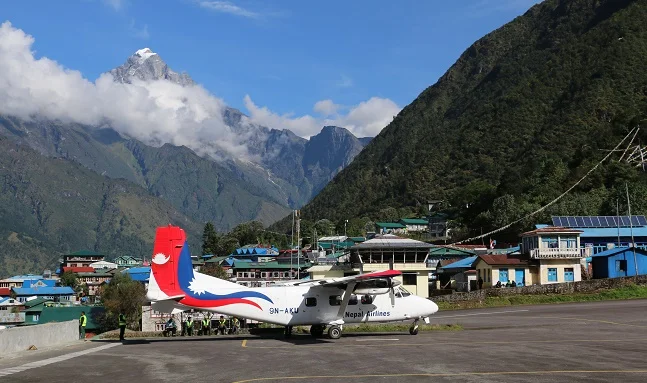
For many trekkers, the adventure begins in the air. Long before your first suspension bridge or cup of tea in Phakding, you’ll be looking through the window of a twin-engine aircraft as the Kathmandu Valley disappears beneath the clouds, headed for one of aviation’s most iconic destinations: Tenzing-Hillary Airport, Lukla.
With its short, uphill runway carved into the mountainside, Lukla has a reputation — online videos of landings there have circulated for years, often making the experience look more frightening than it is. In reality, the pilots flying this route are highly experienced mountain specialists who fly these valleys nearly every day in season, flights are scheduled during calm morning hours, and strict weather requirements mean aircraft simply don’t depart unless conditions are safe. Ironically, the real challenge isn’t the landing — it’s the weather.
Why Flights Get Delayed
Lukla doesn’t have sophisticated instrument landing systems, so pilots rely heavily on visibility. Low cloud, strong wind or snowfall means delays — sometimes an hour, sometimes a day, occasionally longer. For first-time visitors that can feel frustrating; for mountain communities, it’s simply part of everyday life. Experienced trekkers learn to operate on the same timetable the Himalayas always have.
Trail Reality: Weather delays aren’t a sign of poor organisation — they’re evidence the aviation system is prioritising safety over schedules. In the mountains, that’s exactly what you want.
Kathmandu or Ramechhap? Why Your Flight Might Not Leave the Capital
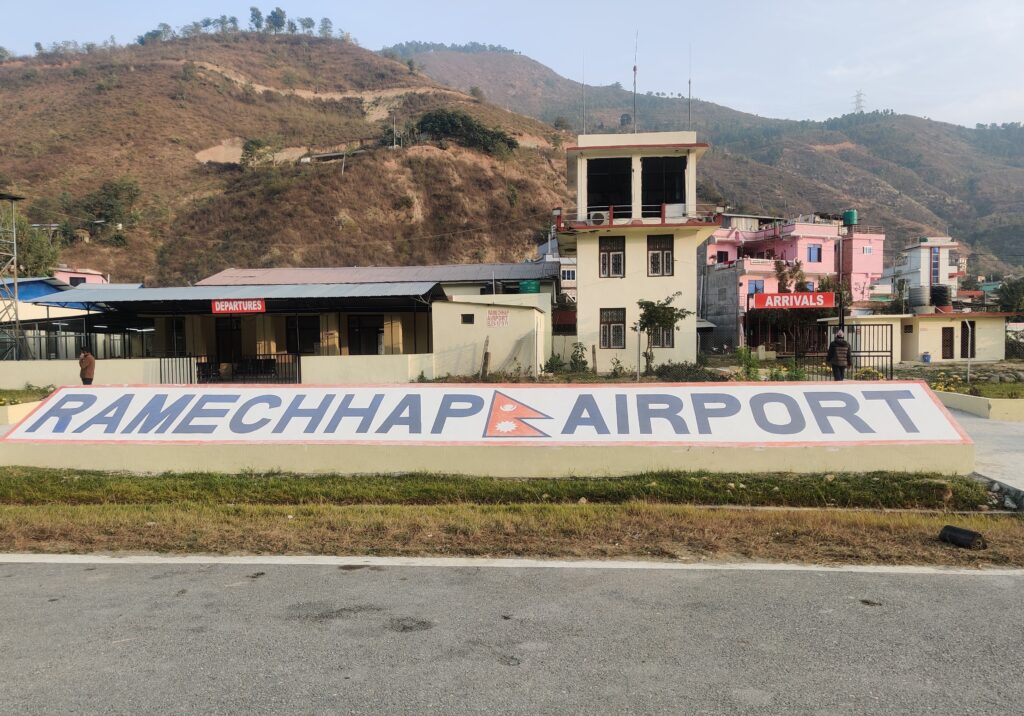
During the busiest seasons — typically March to May and October to November — air traffic at Tribhuvan International Airport gets extremely busy, so most Lukla departures are temporarily relocated to Manthali Airport in Ramechhap, roughly 130km east of Kathmandu. It comes as a surprise to many travellers, but the logic holds up: shifting flights away from the capital lets airlines operate more reliably during the narrow morning weather window when Lukla conditions are usually at their best.
Option One: Flying direct from Kathmandu (typically available in quieter months) — $215–255 one way. Shorter transfer, more relaxed morning, no overnight road journey — ideal for off-season travel. Still weather-dependent regardless of departure point.
Option Two: The Ramechhap route — the reality for most spring and autumn trekkers. You’ll leave your hotel around 1:00–2:00am, drive four to five hours by coach or private vehicle to Manthali Airport, and fly the remaining 20 minutes to Lukla as dawn breaks. It’s exhausting, but it’s become the most reliable way to manage Everest’s seasonal demand. Lukla flight: $175–210; road transfer: $20–25 (some companies include this in the package, others charge separately — always confirm).
Cold Feet Note: The early morning drive to Ramechhap isn’t the glamorous part of an Everest adventure, but it’s often the first reminder that reaching the Himalayas takes patience as much as enthusiasm. Bring a neck pillow, download something to listen to beforehand, and think of the drive as the opening chapter of the journey rather than an inconvenience.
When the Weather Doesn’t Cooperate
Even with careful planning, flights sometimes simply can’t operate. If low cloud settles over Lukla for several days, a backlog of trekkers builds up quickly, and flexibility becomes one of your most valuable assets. Some travellers wait it out; others, especially those with fixed international departures, need another option.
The helicopter alternative: helicopters can often fly in conditions that ground fixed-wing aircraft, so they’re frequently used to clear backlogs. You don’t need to charter a whole helicopter — most travellers simply buy a seat on a shared flight.
Shared seat: $400–600; private charter: $2,500+. Considerably more expensive than a scheduled flight, but it can save several days of waiting when that matters more than the cost.
Why Local Experience Matters
Flight cancellations create a domino effect — airlines get overwhelmed, phone lines jam, transport arrangements shift by the hour. This is where having an experienced local team matters. At Cold Feet Adventure, our operations team monitors flight schedules continuously through the season, and when delays happen we work directly with airlines, transport providers and trusted helicopter operators to find the fastest practical solution — rearranging transfers, securing seats on the next departure, or simply keeping travellers informed while everyone else is still searching for answers. The mountains will always have the final say; good planning is about responding calmly when they do.
From the Trail: Ask any guide about their most memorable Everest story, and chances are it won’t start with reaching Base Camp — it’ll start with a delayed flight, an unexpected sunrise in Lukla, or a cup of tea shared with strangers who became friends while waiting for the clouds to lift.
Part IV — The Human Side of the Budget: Guides, Porters & Mountain Respect
By the time you reach Everest Base Camp, you’ll have crossed swaying suspension bridges, climbed thousands of stone steps, and walked through landscapes that few places on Earth can rival. But you didn’t get there alone. Long before sunrise, while most trekkers are still tying their boots, someone is already carrying 20 to 30 kilograms of equipment up the same trail, checking the weather, speaking with teahouse owners, and quietly watching the group for the earliest signs of altitude sickness. That’s your guide. Or your porter. Sometimes both. Everest is often remembered for its mountains — those who know it well remember its people.
The Guide: Your Most Valuable Investment
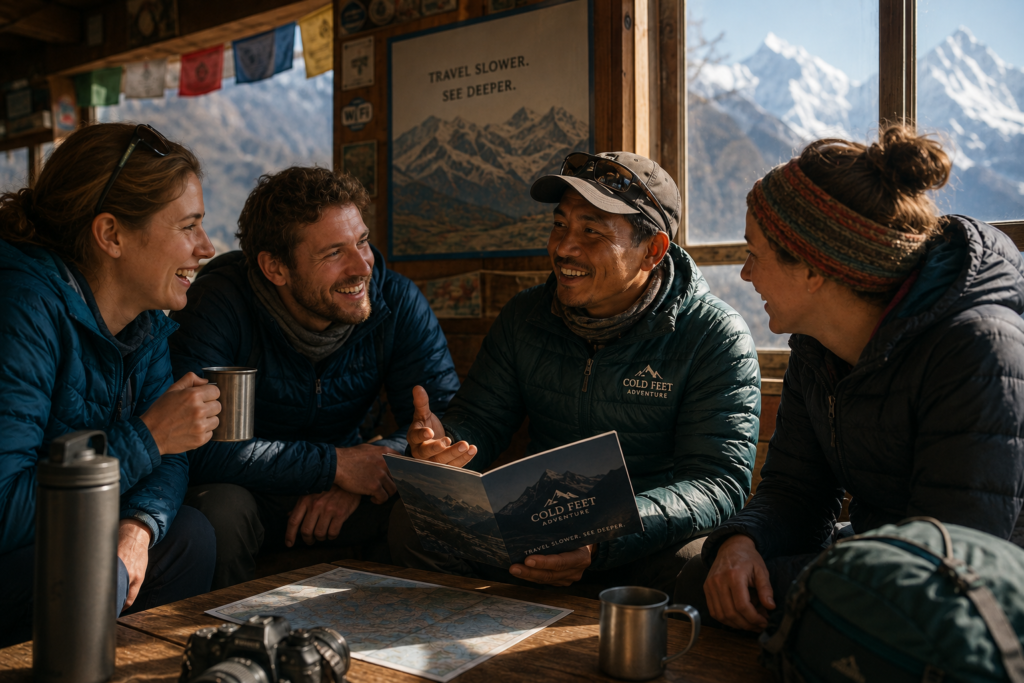
A licensed guide does far more than point toward the next village — part navigator, part medic, part translator, part logistics coordinator, and, before long, part friend. They know which teahouses stay warm during heavy snowfall, recognise the subtle symptoms of Acute Mountain Sickness before most trekkers notice anything unusual, and know when to encourage you forward versus when turning back is the safest call. Reaching Base Camp is never more important to them than getting you home safely — the best guides rarely make dramatic decisions, they quietly make hundreds of good ones every day.
The Porters: The Quiet Strength Behind Every Trek
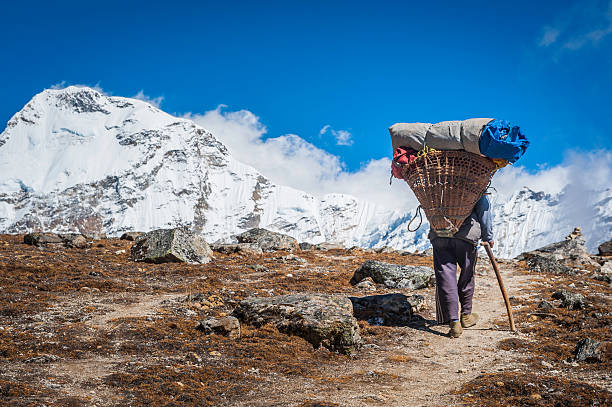
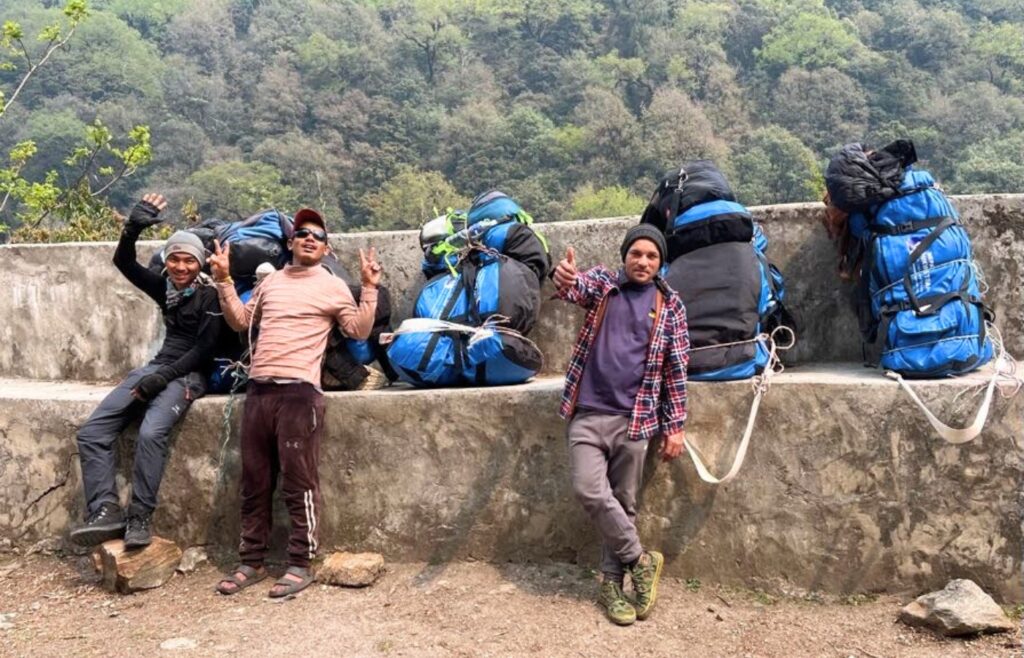
If Everest has unsung heroes, it’s the porters. Walk the trail for a single morning and you’ll step aside as someone carrying an impossibly large load — gas cylinders, construction materials, food supplies, even windows for new teahouses — passes with calm determination, often with nothing more than a woven basket, a head strap, and decades of experience. While most trekkers carry a light daypack, porters shoulder the weight that makes the whole trek possible. They’re not simply helping your trip along — they’re the reason trekking in the Khumbu exists at all.
Cold Feet Note: One of the easiest ways to show respect on the trail is to step to the uphill side whenever porters or yak caravans pass — it keeps everyone safe, and it’s a small gesture local communities genuinely notice.
Understanding Tipping in Nepal
Tipping isn’t legally required in Nepal, but it’s an important part of trekking culture. Guiding and portering is seasonal work — most guides and porters have only a few months a year to earn enough to carry their families through the quieter season. A thoughtful tip helps pay for children’s education, winter clothing, and household expenses during the months the trails sit empty. Seen that way, tipping becomes less about obligation and more about appreciation.
Typical guidelines: Lead guide, $15–20/day per group (roughly $180–280 combined over a standard 14-day trek).
Porter, $8–10/day per group — remember one porter often carries the equipment of two trekkers over steep, high-altitude terrain. If calculating daily amounts feels complicated, a simple rule of thumb is to budget 10–15% of your total trek cost for guide and porter gratuities.
On etiquette: Present tips at the end of the trek rather than during it, ideally in an envelope, offered directly to the individual rather than through someone else, handed over with both hands — a traditional gesture of respect in Nepal. These moments are rarely formal; more often they come with smiles, photos, shared meals, and genuine thank-yous after two unforgettable weeks together.
Cash in Nepali Rupees is generally more practical than USD, since it saves your guide or porter the hassle of exchanging foreign currency later — and avoid tipping in foreign coins, since Nepali banks generally can’t exchange them. Exchange enough before leaving Kathmandu, since reliable banking becomes limited beyond Namche Bazaar.
From the Trail: Ask experienced trekkers what they miss most after returning home. Few mention the altitude. Few even mention Everest itself. More often they talk about evenings around a warm stove, laughing with guides, sharing stories with strangers — and discovering that the greatest luxury in the Himalayas isn’t found in a hotel, but in the generosity of the people who call these mountains home.
Part V— The Real Everest Budget: What Should You Actually Bring?
After permits, flights, food, Wi-Fi, charging fees and crew tips, most trekkers ask one final question: how much money should I realistically bring to Nepal?
Everest Base Camp Budget (2026)
| Expense | Typical Cost (USD) |
|---|---|
| Guided EBC Package | $1,300–2,400 |
| Travel Insurance | $100–250 |
| Trail Spending Money | $250–400 |
| Guide & Porter Tips | $150–300 |
| Gear Purchases / Rentals | $150–600 |
| Recommended Total Budget | $1,800–3,000 |
Even if your package includes accommodation and meals, carry $250–400 USD equivalent in Nepali Rupees for hot drinks, snacks, Wi-Fi, charging, the occasional shower, bakery treats in Namche Bazaar, emergencies, and tips.
Cold Feet Note (Important): Exchange enough Nepali Rupees in Kathmandu. ATMs become limited after Namche Bazaar, and even the machines there occasionally run out of cash or lose power.
Everest Base Camp FAQ
Is $2,000 enough for Everest Base Camp? For most travellers booking a mid-range guided trek, yes — around $2,000–2,500 USD is usually comfortable.
Can I use a credit card on the trail? Occasionally in Namche Bazaar, but cash remains the primary payment method throughout most of the Everest region.
Are there ATMs after Lukla? Limited ATMs exist in Namche Bazaar, but they’re not always reliable — don’t depend on them.
What is the biggest hidden cost? For most trekkers, it’s the combination of snacks, charging fees, Wi-Fi and tips — individually small, but they add up over two weeks.
Should I carry USD or Nepali Rupees? Bring some USD for emergencies, but carry most trail spending money in Nepali Rupees.
Can I trek Everest Base Camp without a guide? Current Nepal regulations require foreign trekkers to use a licensed guide in major mountain regions.
How much should I tip guides and porters? Budget around 10–15% of your total trek cost, or roughly $15–20/day for guides and $8–10/day for porters (shared among the group).
Before You Go: Five Things to Remember
- Budget $1,800–2,800 USD for a comfortable trip.
- Carry $250–400 USD equivalent in cash for trail expenses.
- Buy a 20,000mAh power bank before arriving.
- Eat dal bhat regularly — it’s usually the best value on the mountain.
- Budget guide and porter tips as part of the trip, not an afterthought.
Final Thoughts
Everest Base Camp isn’t a cheap trip, but it doesn’t have to be a financial mystery either. The trekkers who enjoy the journey most are rarely the ones who spent the most — they’re the ones who arrived with realistic expectations, a sensible budget, and enough flexibility to let the mountains surprise them. Somewhere between the flight to Lukla, the first bowl of dal bhat, the climb to Namche, and the final steps to Base Camp, most people stop thinking about what the trek cost and start thinking about how lucky they are to be there. That’s usually the memory that lasts.
We’ll see you on the trail.
Leave a Reply