

Last updated: August 2026
Before the first suspension bridge, the first teahouse, or the first glimpse of snow, every trekker in Nepal has to answer one unglamorous question: what permits do I actually need?
Search online and you’ll get contradictions. One site says a permit is mandatory. Another says it was scrapped years ago. A forum post from 2019 disagrees with a government notice from last month. That’s because Nepal doesn’t have one trekking permit — it has several, issued by different authorities, each covering a different purpose: protecting fragile ecosystems, regulating culturally sensitive border regions, and funding the trails, guides, and communities that make trekking here possible in the first place.
This guide walks through exactly which permits you need for every major route — Everest, Annapurna, Langtang, Manaslu, Upper Mustang, Dolpo, Kanchenjunga, and Makalu — what they cost, where to get them, and what’s changed for 2026/2027.
What Is a Trekking Permit, Exactly?
A trekking permit is an official authorization to enter a specific region — issued by a national park, a conservation area authority, a local municipality, or Nepal’s Department of Immigration. Many treks require more than one, because your route often crosses land managed by more than one authority. An Everest Base Camp trek, for example, needs both a local municipality permit and a national park permit. Manaslu needs three permits from three different bodies. Each type serves a different purpose:
- National park permits fund wildlife and habitat protection.
- Conservation area permits fund environmental work while giving local communities a direct stake in tourism.
- Restricted area permits regulate visitor numbers in culturally or geopolitically sensitive regions.
- Local municipality fees go straight to trail maintenance, waste management, and community services.
Nepal’s Four Types of Trekking Permits
1. National Park Entry Permits
Required if your route passes through a national park — for example Sagarmatha National Park (Everest region), Langtang National Park, or Makalu Barun National Park. Fees fund conservation, park infrastructure, and visitor management.
2. Conservation Area Permits
Used in regions managed under a community-based model rather than strict national park rules. The two main ones: the Annapurna Conservation Area Permit (ACAP) and the Manaslu Conservation Area Permit (MCAP).
3. Restricted Area Permits (RAP)
Required for regions near international borders or with unique cultural heritage — Upper Mustang, Upper Dolpo, the restricted section of Manaslu, Nar Phu Valley, and parts of Kanchenjunga. These must be arranged through a registered trekking agency, require a licensed guide, and often have minimum group sizes and fixed durations. You cannot apply for these independently.
4. Local Municipality Permits
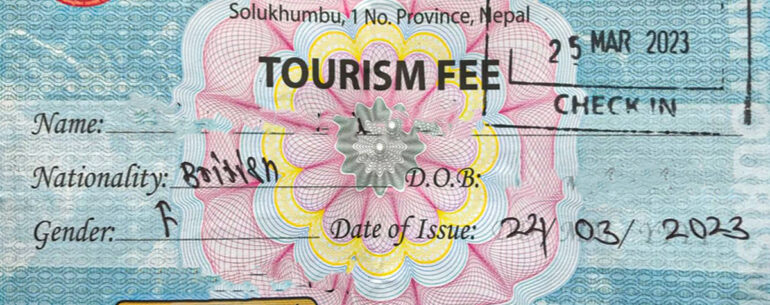
A newer layer, collected directly by local governments. The best-known example is the Khumbu Pasang Lhamu Rural Municipality Permit, now required for most Everest region treks. This reflects a broader shift: more permit revenue staying with the communities who actually host trekkers.
Nepal Trekking Rules for 2026/2027
Is a guide mandatory?
In 2023, the Nepal Tourism Board announced that foreign trekkers must be accompanied by a licensed guide, aimed at improving safety and search-and-rescue response. Enforcement has been consistent in restricted areas (Mustang, Manaslu, Nar Phu, Dolpo have required this for years), but more variable elsewhere. Don’t rely on a friend’s experience from last season — check current requirements for your specific route before you go.
Are solo treks allowed?
Depends entirely on the region. Restricted areas have never allowed independent trekking. Elsewhere, policy is shifting. Check your specific itinerary rather than assuming.
Do you still need a TIMS card?
It’s mixed. In the Everest region, the Khumbu Pasang Lhamu Rural Municipality Permit has largely replaced TIMS. Other regions may still require or recommend it. Confirm before you travel rather than assuming either way.
Permit Requirements by Trek
| Treks | Permits required | Is a guide compulsary? |
|---|---|---|
| Everest Base Camp / Gokyo Lakes / Three Passes | Khumbu Rural Municipality Permit + Sagarmatha National Park Entry Permit | Yes |
| Annapurna Base Camp / Circuit / Mardi Himal / Poon Hill | Annapurna Conservation Area Permit (ACAP) | Check current regulations |
| Langtang Valley / Gosaikunda | Langtang National Park Entry Permit | Yes |
| Manaslu Circuit / Tsum Valley | Manaslu RAP + MCAP + ACAP | Yes |
| Upper Mustang | Upper Mustang RAP + ACAP | Yes |
| Nar Phu Valley | Nar Phu RAP + ACAP | Yes |
| Upper Dolpo | Upper Dolpo RAP + Shey Phoksundo National Park Permit | Yes |
| Kanchenjunga Base Camp | Kanchenjunga Conservation Area Permit (KCAP) | Check current regulations |
| Makalu Base Camp | Makalu Barun National Park Entry Permit | Check current regulations |
Quick comparison: Annapurna, Langtang, Kanchenjunga, and Makalu have the simplest and cheapest permit setups — usually one fixed-fee permit each. Upper Mustang sits at the other end, among the most expensive permits in the country by design, meant to cap visitor numbers in a culturally sensitive region. Manaslu is the most layered route logistically, needing three separate permits from three different authorities.
Region-by-Region Breakdown
Everest Region
Most trekkers heading to Everest Base Camp need two permits, not the ACAP-style single pass some older guidebooks describe:
- Khumbu Pasang Lhamu Rural Municipality Permit — issued locally at Lukla or Monjo; replaced TIMS for most Everest trekkers.
- Sagarmatha National Park Entry Permit — required on entry to the park, protected since 1976.
Same combination covers Gokyo Lakes, the Three Passes trek, Everest View, and Ama Dablam Base Camp approaches. Island Peak requires an additional climbing permit.
Annapurna Region
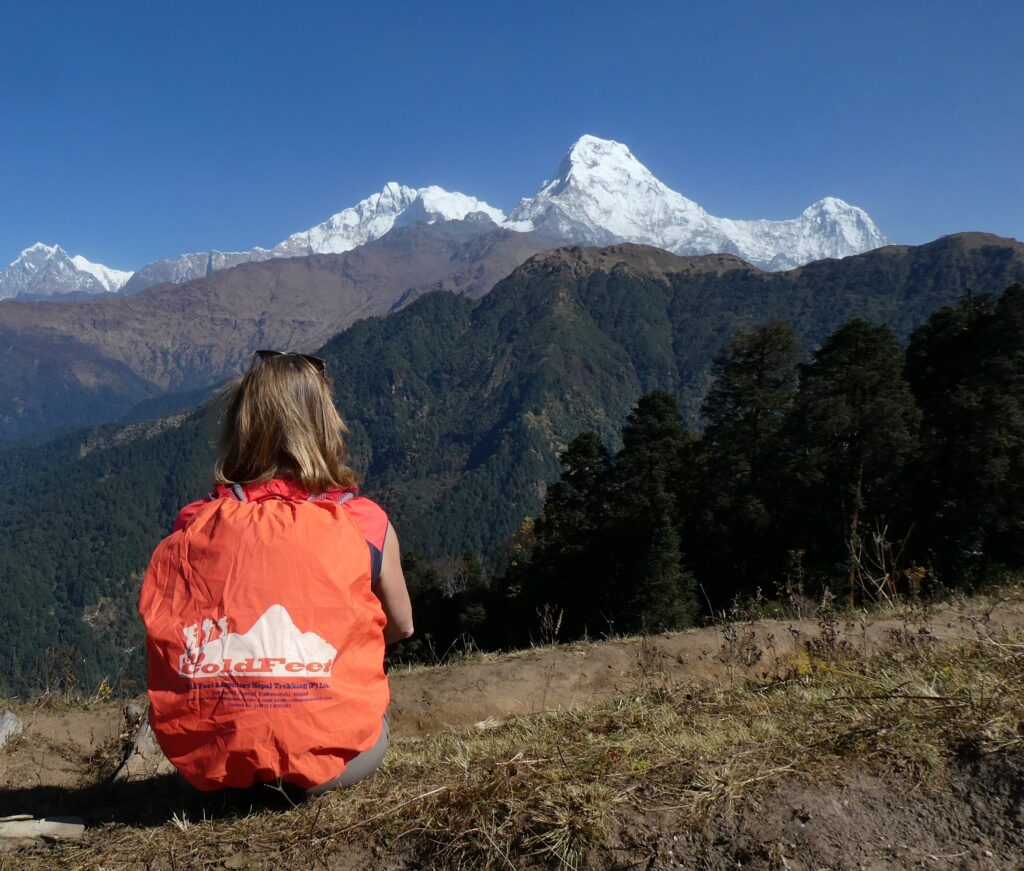
Nepal’s most-visited region also has the simplest permit system: nearly every route needs just the Annapurna Conservation Area Permit (ACAP), covering Nepal’s largest conservation area at over 7,600 square kilometers, managed under a community-based model rather than strict national park rules.
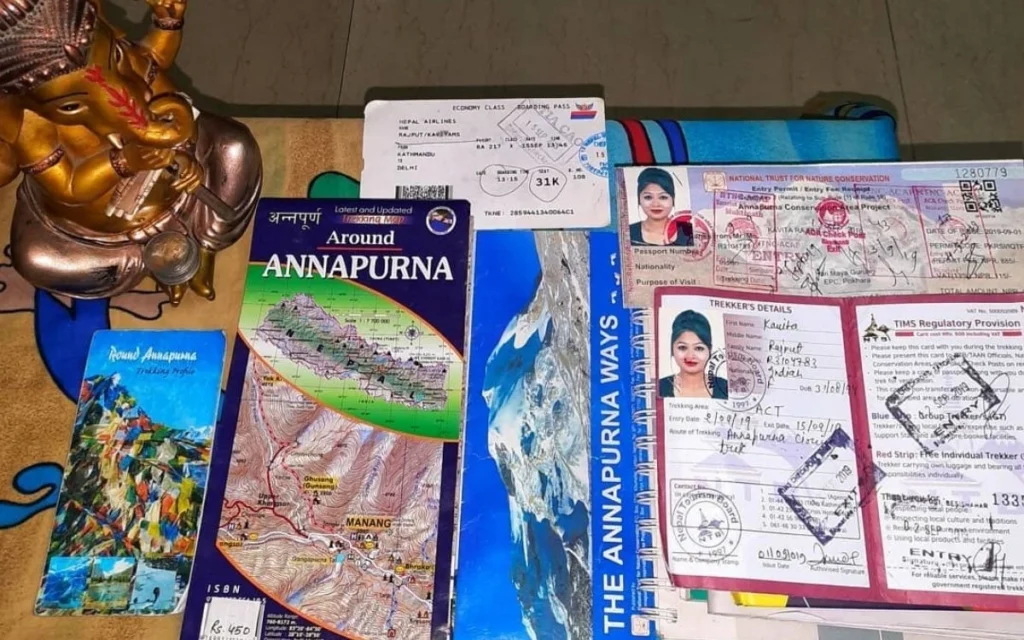
ACAP covers Annapurna Base Camp, the full Circuit, Mardi Himal, Ghorepani Poon Hill, Khopra Ridge, Mohare Danda, and Tilicho Lake — and it’s also required for the Annapurna-adjacent sections of the Manaslu Circuit, Nar Phu Valley, and Upper Mustang treks.
Langtang Region
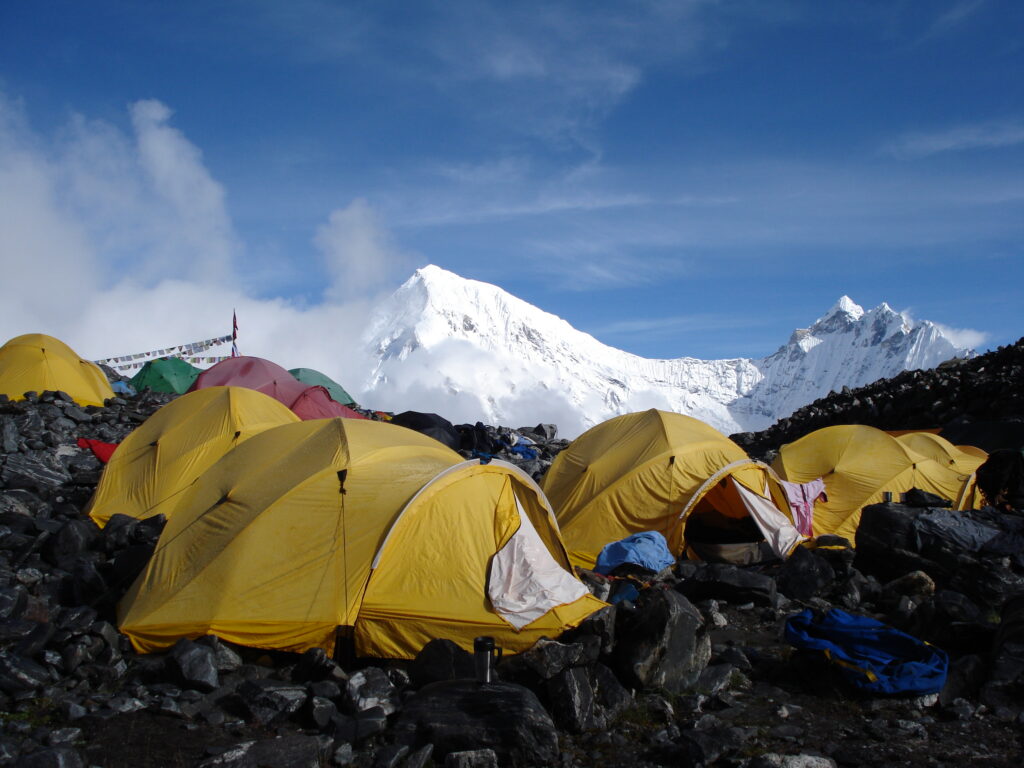
A day’s drive from Kathmandu, Langtang requires only the Langtang National Park Entry Permit, covering the Langtang Valley, Gosaikunda, and Tamang Heritage treks. Nepal’s first Himalayan national park (established 1976), it protects habitat ranging from subtropical forest to red panda territory. Since the 2015 earthquake, permit revenue has also supported the region’s rebuild.
Manaslu Region
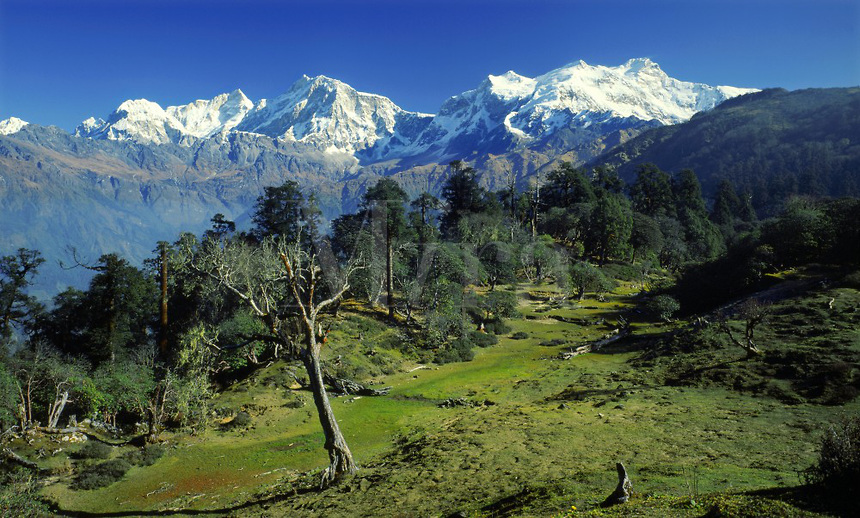
Manaslu requires three permits, more than any other major route:
- Manaslu Restricted Area Permit (RAP) — covers the section between Jagat and Sama Gaun, near the Tibet border. Must be arranged through a registered agency, requires a licensed guide, and has seasonal pricing.
- Manaslu Conservation Area Permit (MCAP) — funds conservation and community tourism work within the Manaslu Conservation Area.
- Annapurna Conservation Area Permit (ACAP) — needed because the route crosses into the Annapurna Conservation Area after Larkya La Pass, a detail that surprises a lot of first-timers.
Nar Phu Valley
Isolated until recently, Nar Phu requires a Nar Phu Restricted Area Permit plus ACAP. As with all restricted regions, you’ll need a registered agency and licensed guide. Many trekkers combine it with the Annapurna Circuit.
Upper Mustang
The former Kingdom of Lo requires an Upper Mustang Restricted Area Permit plus ACAP. It’s one of the most expensive permits in Nepal — a deliberate policy to limit visitor numbers and fund conservation in a region that remained closed to outsiders for decades. Independent trekking isn’t an option here; you’ll need an agency and guide.
Dolpo Region
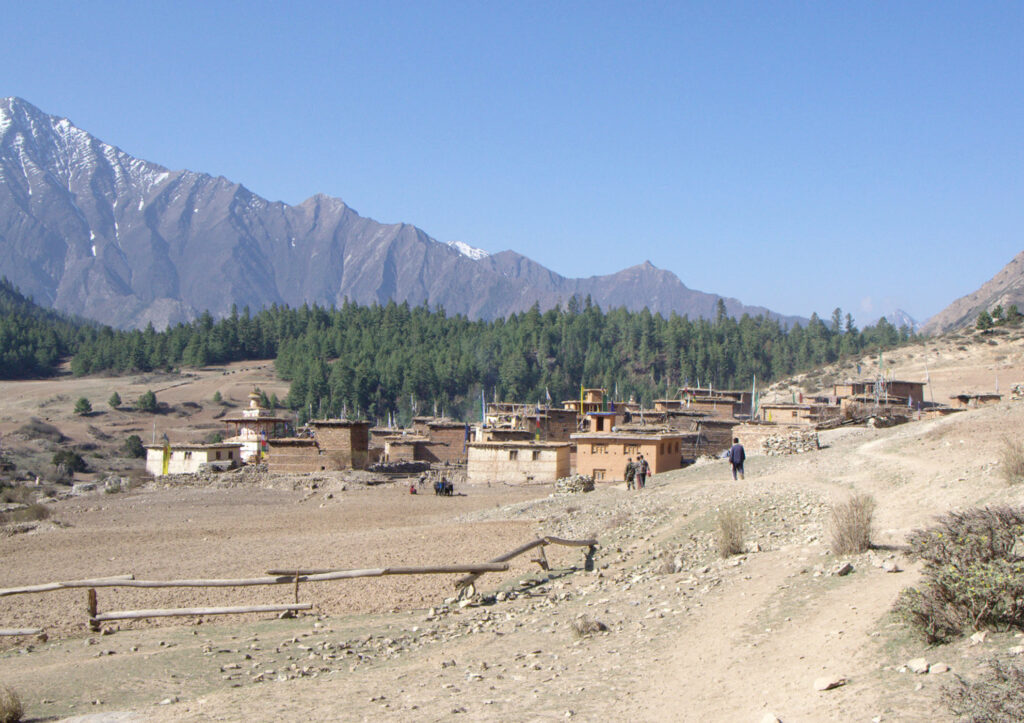
Upper Dolpo requires an Upper Dolpo Restricted Area Permit plus the Shey Phoksundo National Park Entry Permit (Lower Dolpo may need additional permits). Registered agency and licensed guide are mandatory.
Kanchenjunga Region
Kanchenjunga requires the Kanchenjunga Conservation Area Permit (KCAP), plus a Restricted Area Permit for certain border-adjacent itineraries. Confirm current guide requirements early, since logistics here take longer to plan.
Makalu Region
Makalu Base Camp requires only the Makalu Barun National Park Entry Permit, though route extensions toward restricted border areas may add requirements.
Where to Get Your Permits
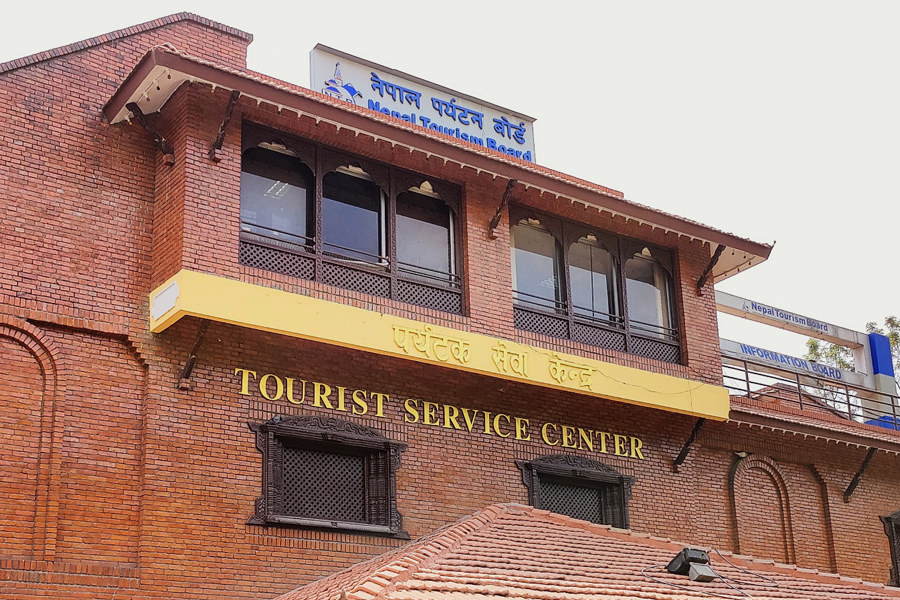
- Nepal Tourism Board offices in Kathmandu and Pokhara — the main permit centers for most trekkers.
- National park entry gates — for example, Sagarmatha National Park permits are commonly issued at Monjo, and Everest-region municipality permits at Lukla or Monjo.
- Through a registered trekking agency — mandatory for restricted area permits (Mustang, Manaslu, Nar Phu, Dolpo), and often the simplest route for standard permits too.
What You’ll Need to Apply
- Valid passport
- Passport-sized photos (for permits still requiring printed applications)
- Nepal visa
- Permit fees in accepted currency
- Your trekking itinerary
- Guide or agency details, where applicable
Carry printed copies of your passport and permits alongside digital ones — checkpoints generally expect physical documents, and mobile coverage in the mountains is unreliable.
Nepal Trekking Permit Costs (2026/2027)
| Region | Required Permit(s) | Current Permit Cost (Foreign Nationals) |
|---|---|---|
| Everest | Khumbu Pasang Lhamu Rural Municipality Permit + Sagarmatha National Park Entry Permit | NPR 2,000 + NPR 3,000 = NPR 5,000 |
| Annapurna | Annapurna Conservation Area Permit (ACAP) | NPR 3,000 |
| Langtang | Langtang National Park Entry Permit | NPR 3,000 |
| Manaslu Circuit | Restricted Area Permit + MCAP + ACAP | RAP: Sep–Nov: USD 100 (first 7 days) + USD 15/day thereafter; Dec–Aug: USD 75 (first 7 days) + USD 10/day thereafter + MCAP: NPR 3,000 + ACAP: NPR 3,000 |
| Nar Phu Valley | Nar Phu Restricted Area Permit + ACAP | RAP: Sep–Nov: USD 100 (first 7 days) + USD 15/day thereafter; Dec–Aug: USD 75 (first 7 days) + USD 10/day thereafter + ACAP: NPR 3,000 |
| Upper Mustang | Restricted Area Permit + ACAP | RAP: USD 50 per day + ACAP: NPR 3,000 |
| Upper Dolpo | Restricted Area Permit + Shey Phoksundo National Park Permit | RAP: USD 500 (first 10 days) + USD 50/day thereafter + Park Permit: NPR 3,000 |
| Kanchenjunga | Kanchenjunga Conservation Area Permit (KCAP) | KCAP: NPR 3,000 |
| Makalu Base Camp | Makalu Barun National Park Entry Permit | NPR 3,000 |
Permit fees are revised periodically — always confirm current rates before finalizing your itinerary. Permits are only one part of your budget; guides, accommodation, meals, and gear typically make up the larger share. See our Complete Nepal Trekking Cost Guide 2026/2027] for the full breakdown.
Common Mistakes to Avoid
- Assuming one permit covers every trek. Everest, Annapurna, and the restricted regions each have their own systems.
- Relying on outdated articles. Old posts still rank well even after rules have changed — check that what you’re reading reflects the current season.
- Underestimating restricted-area rules. Manaslu, Mustang, Nar Phu, and Dolpo require an agency, a licensed guide, and fixed permit durations — arranged in advance, not at the trailhead.
- Leaving permits until the last minute. Restricted area permits especially need lead time.
- Carrying only digital copies. Checkpoints expect physical documents; phones die and screens crack.
Frequently Asked Questions
Do I need a permit for every trek in Nepal?
Almost all established routes require at least one permit — a national park entry permit, conservation area permit, municipality fee, or restricted area permit.
Can I buy permits after arriving in Nepal?
Yes, most are available in Kathmandu or Pokhara, or at regional checkpoints. Restricted area permits must go through a registered agency.
Can my trekking agency arrange permits for me?
Yes — this is mandatory for restricted areas and usually the simplest option for standard permits too.
How long are permits valid?
It depends on the permit. Some cover a single entry; restricted area permits are issued for a fixed number of days matching your itinerary.
What if I lose my permit?
Contact the issuing authority or your agency immediately, before or during the trek, so they can advise on next steps before your next checkpoint.
Do children need permits?
Usually yes, though reduced fees or exemptions can apply depending on age and issuing authority. Cold Feet will provide a huge discount for children if you book an experience with us.
Are permit fees refundable if I cancel?
Generally no, though policies vary by authority — check with the issuing office or your agency before assuming otherwise.
Final Thoughts
It’s easy to think of permits as paperwork — one more box to tick between booking flights and packing a sleeping bag. In Nepal, they’re closer to a contribution: to trail maintenance, to conservation, to the communities whose land you’re walking through. Once they’re sorted, they fade into the background fast, and what’s left is the actual reason you came — yak bells at dawn, prayer flags on a high pass, tea shared with people who become friends along the way.
Rules shift from season to season, so it’s always worth confirming current requirements before you go. But the paperwork itself is a small, manageable part of a much bigger trip.
Need Help Planning Your Trek?
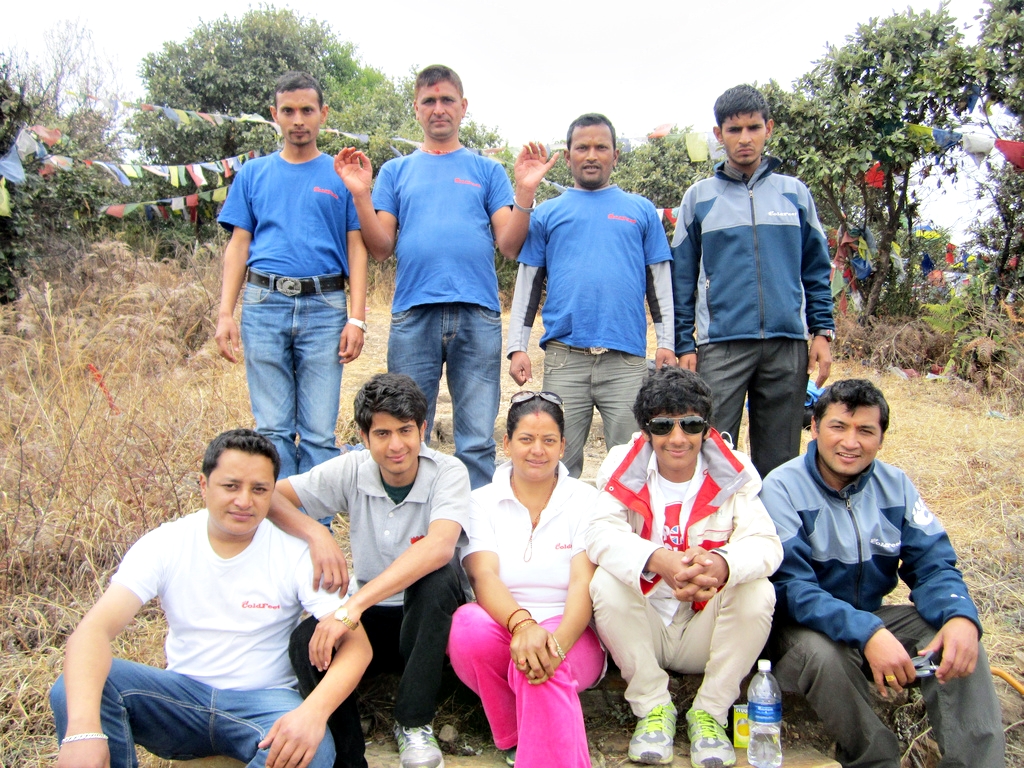
If you’d rather not track down permit rules region by region, our team at Cold Feet Adventure Nepal can handle the paperwork, arrange licensed guides, and help build an itinerary around your experience level and timeline. Get in touch before you land — we’re happy to help even at the planning stage.
Leave a Reply