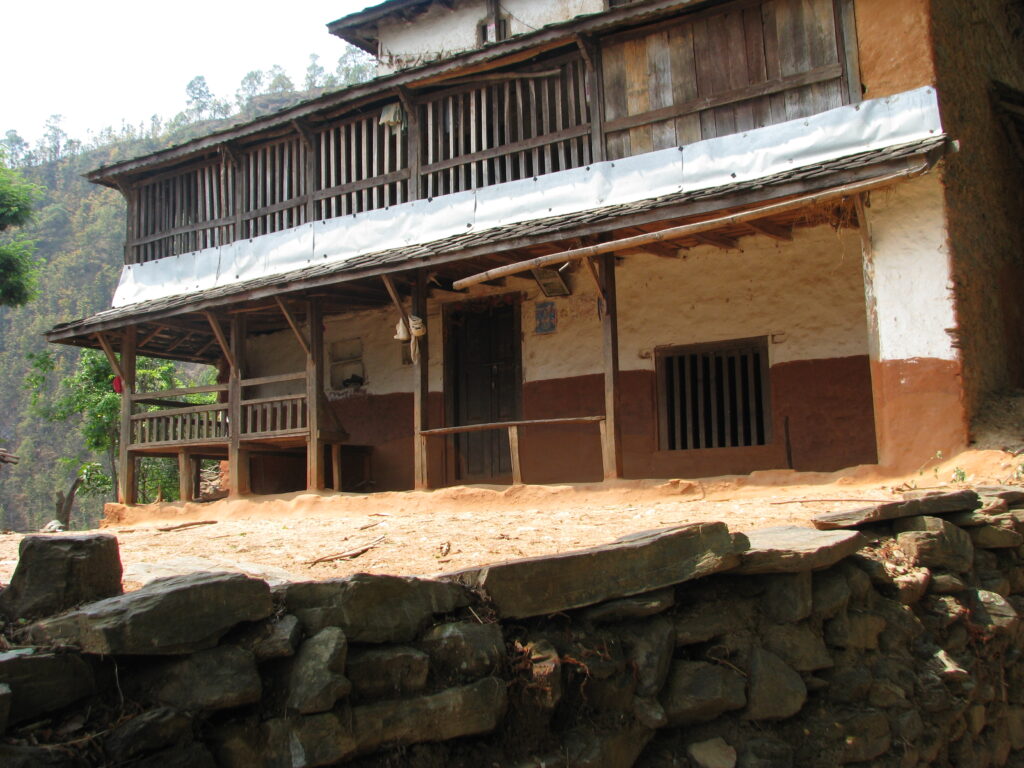
The village has been awake for longer than you have.
Somewhere beyond the window, someone is already sweeping the courtyard. Smoke rises from the first kitchen fires, a rooster answers another across the valley, and footsteps disappear up a narrow hillside path before the sun has reached the terraces. A cup of tea is placed gently into your hands. Nobody asks what you plan to see today. Instead, someone smiles and asks a simpler question.
“Would you like to come?”
The first step toward belonging is rarely understanding. More often, it begins with curiosity, laughter, and the willingness to be present.
I
Attention, Not Distance
By Abhay Gautam
You already know what the mountain looks like before you’ve left home. You’ve seen the photograph a hundred times, read the caption, watched someone else’s sunrise from someone else’s ridge. Flights have shortened distance to almost nothing. Translation apps dissolve language in seconds. The world has never been more available to us.
Yet something else has quietly become scarce. Not destinations. Not information. Attention.
We have become extraordinarily skilled at consuming moments without entering them — collecting impressions instead of letting a place reshape us. We travel across the world only to recognise places we have never actually visited.
This isn’t simply a failure of modern travel. It’s a failure to understand how anyone learns anything. A child doesn’t learn to cook by watching recipes online. No apprentice becomes a carpenter by standing in the corner of the workshop. Human knowledge has always come through participation — through doing, through mistakes, through repetition until movement becomes instinct. Travel, strangely, is one of the last places we still believe spectatorship is enough.
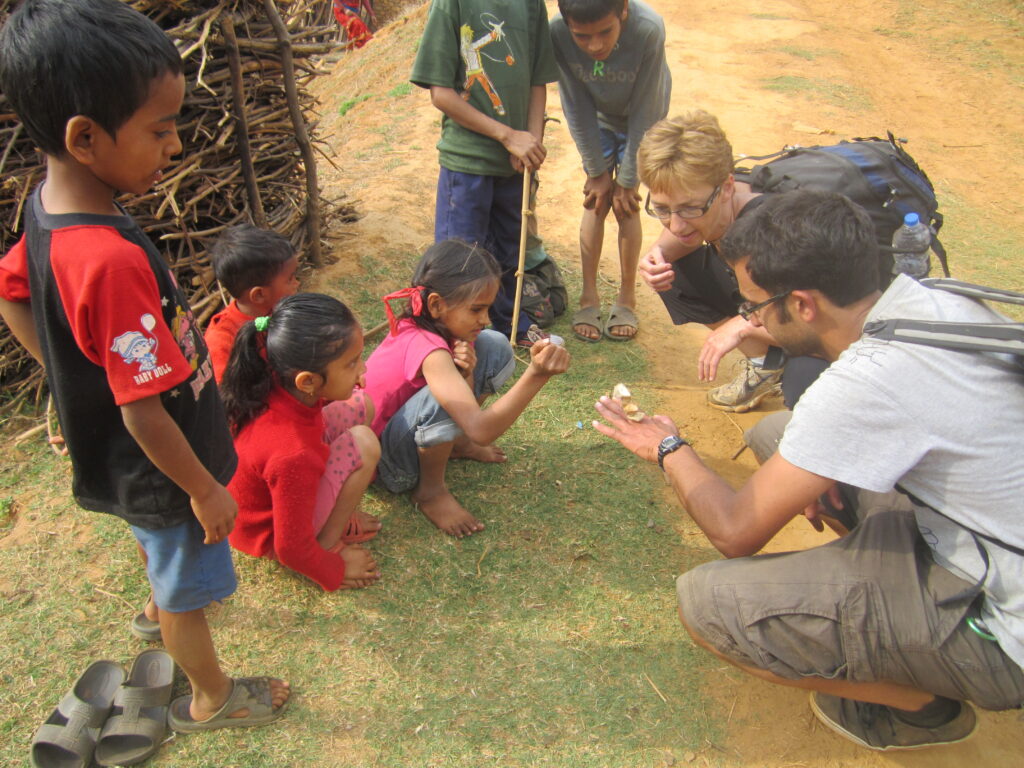
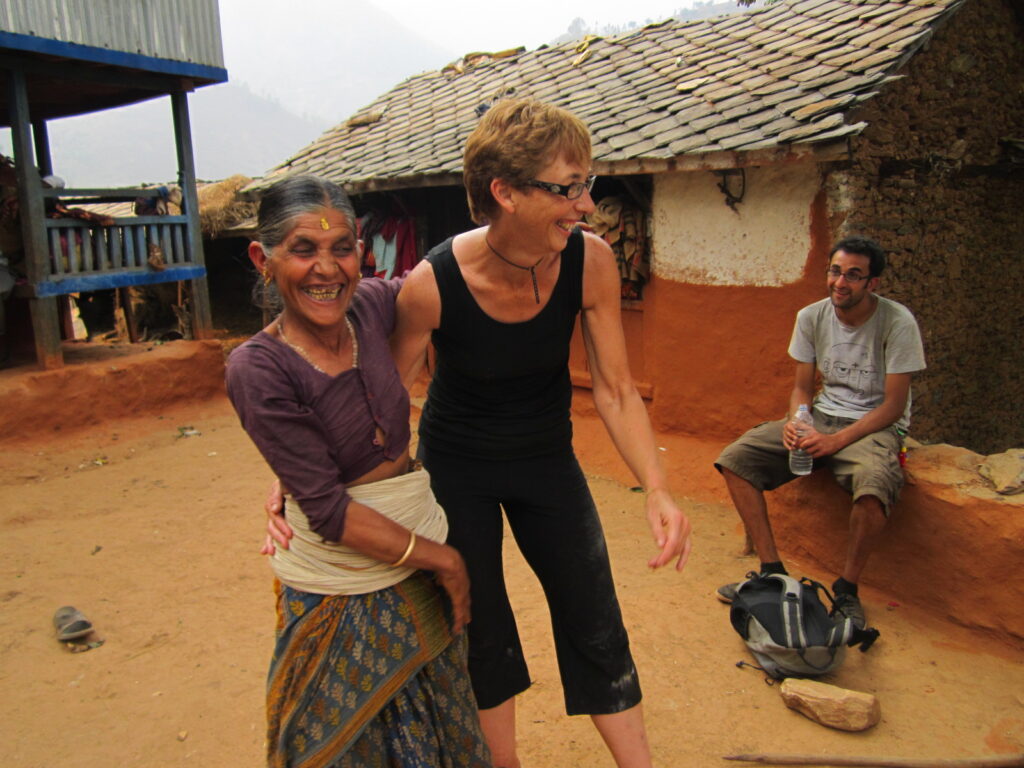
A traveller may forget the panoramic viewpoint long before they forget the awkward satisfaction of learning to carry a doko without losing balance, or sitting beside a grandmother while she shows them, laughing, how a first attempt at kodo ko roti falls apart. These aren’t spectacles. They ask something of the person involved — and that’s exactly why they stay with us.
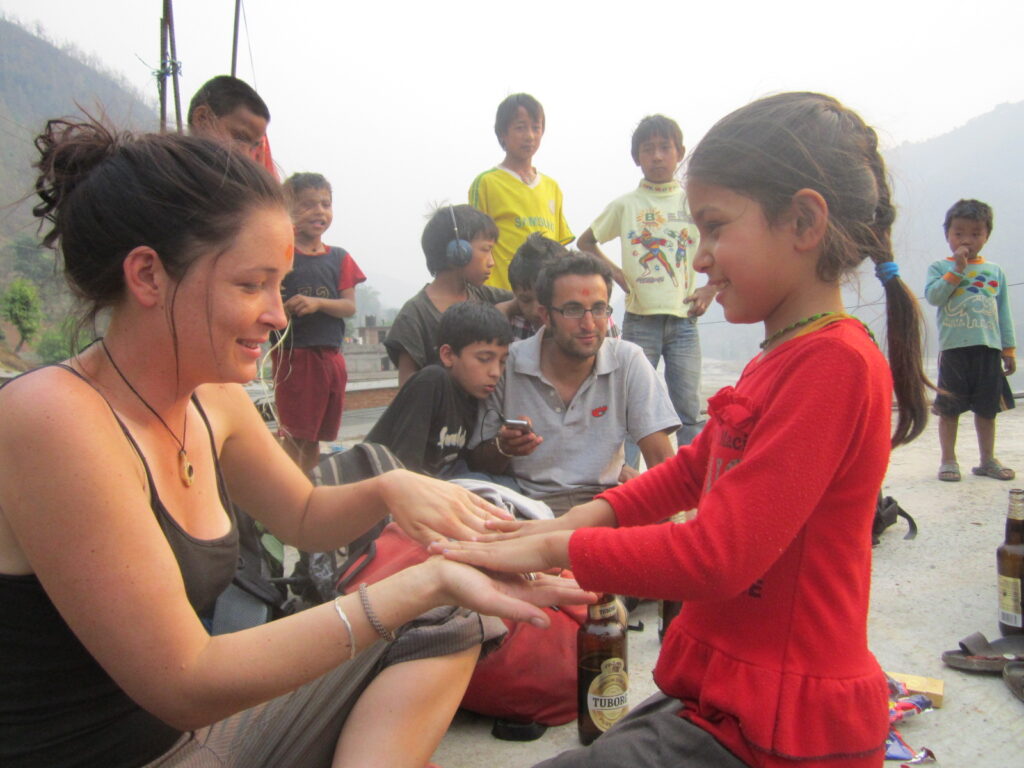
Participation also rearranges who is teaching whom. The farmer becomes a teacher, not a subject for photography. The elder becomes a guide, not an exhibit. Hospitality stops being a service exchanged for payment and becomes what it has always been in many communities: an invitation into a way of life, however briefly.
Before we speak of villages, belonging, or what any of this asks of a traveller, the question is simpler than it seems.
What does it actually mean to arrive?
II
The Invitation
For all our technological progress, there are still places that refuse to become performances. They are not hidden because they are difficult to find, nor protected by gates or entrance fees. They remain overlooked because they ask for something increasingly unfamiliar from the people who arrive there. They ask for time before they offer intimacy, curiosity before explanation, and patience before reward. In an age accustomed to instant access, those conditions can feel almost radical.
Belonging rarely begins with extraordinary moments. More often, it begins by sitting quietly long enough for a place to continue being itself around you.
Villages have always understood that belonging cannot be hurried. A stranger does not become a guest by crossing a threshold, nor does a guest become part of a household simply by staying the night. Trust accumulates through ordinary moments that rarely appear in guidebooks: accepting another cup of tea even when you have finished the first, walking together to collect fodder without feeling the need to fill every silence, recognising the faces you passed yesterday and greeting them by name the next morning. None of these gestures seem significant in isolation. Together, they create the invisible architecture upon which every community quietly depends.
This is one of the great misunderstandings of modern tourism. We often imagine authenticity as something waiting to be discovered, as though every destination possesses a hidden room reserved for travellers who know where to look. In reality, authenticity is rarely hidden. It is simply occupied. It exists in the routines that continue whether visitors arrive or not: fields that still require tending after the photographs have been taken, children who still walk to school along the same stone paths, neighbours who still stop to exchange news beneath the shade of a walnut tree because that conversation matters more than the passing of time.
The invitation, then, is never to witness these lives as though they were scenes in a museum. It is to enter them gently enough that they are not interrupted by your presence.
That requires a different kind of travel—one measured less by the number of places reached than by the quality of attention offered to each one. The finest hosts have always understood this instinctively. They do not overwhelm guests with performances designed to impress them. Instead, they make space at the table, hand over another bowl, point towards the footpath leading to tomorrow’s work, and allow hospitality to unfold through the quiet confidence of everyday life.
This is why the future of meaningful travel may not lie in searching for increasingly remote destinations, but in recovering an older understanding of arrival. To arrive is not merely to reach a place. It is to accept that for a brief period your rhythm will no longer be the one that matters most. You begin to wake when the household wakes, eat when the meal is ready, pause when conversation lingers, and walk at the pace the landscape permits. Somewhere within that gentle surrender, the destination ceases to be something you consume and becomes something that slowly, almost imperceptibly, begins to receive you.
III
Ordinary Things
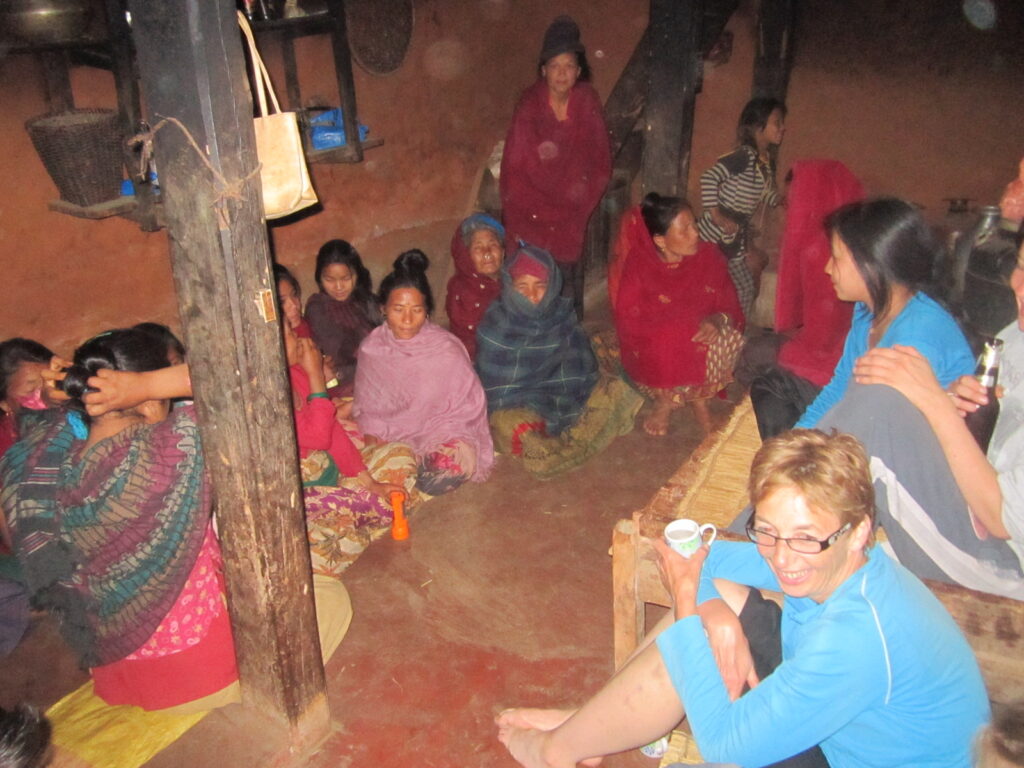
The places that remain with us are rarely the ones that tried hardest to impress us. We may remember the scale of a mountain, but memory has a curious habit of fastening itself to smaller things: the smell of wood smoke before dawn, the uneven rhythm of footsteps on a centuries-old stone path and the enamel cup of tea pressed into our hands before we’d thought to ask for it.
A village teaches attention one ordinary moment at a time.
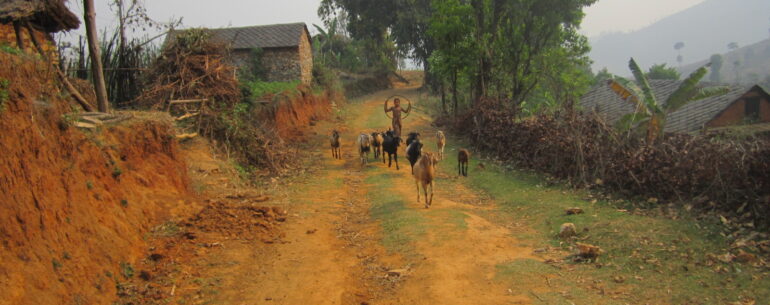
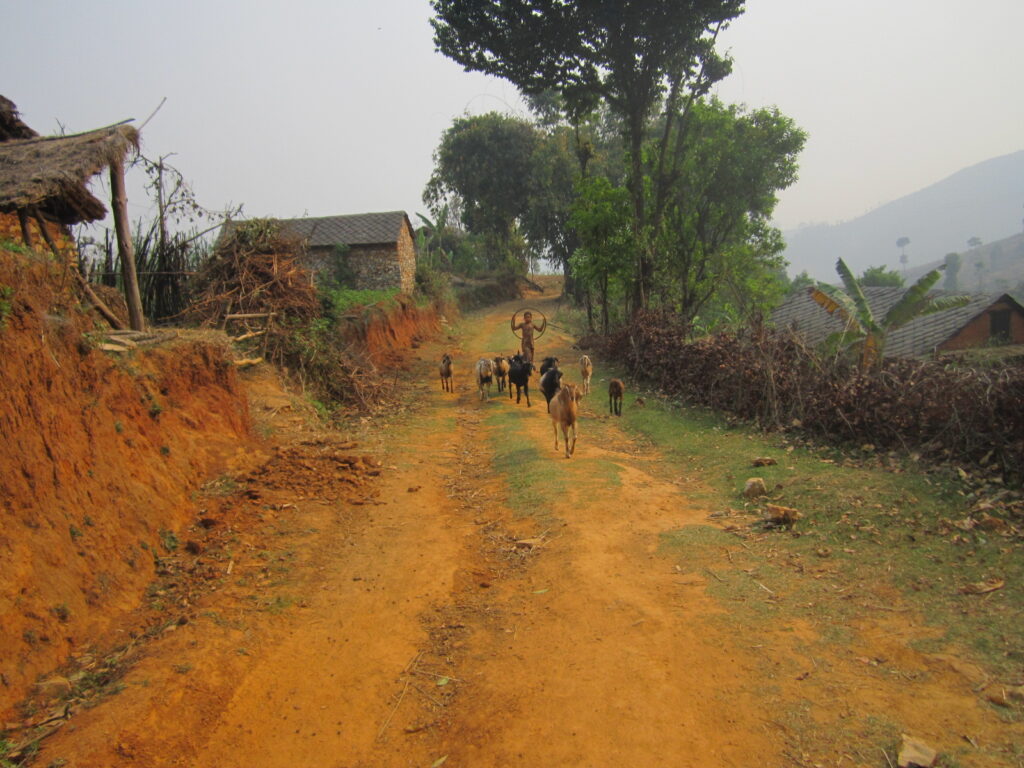
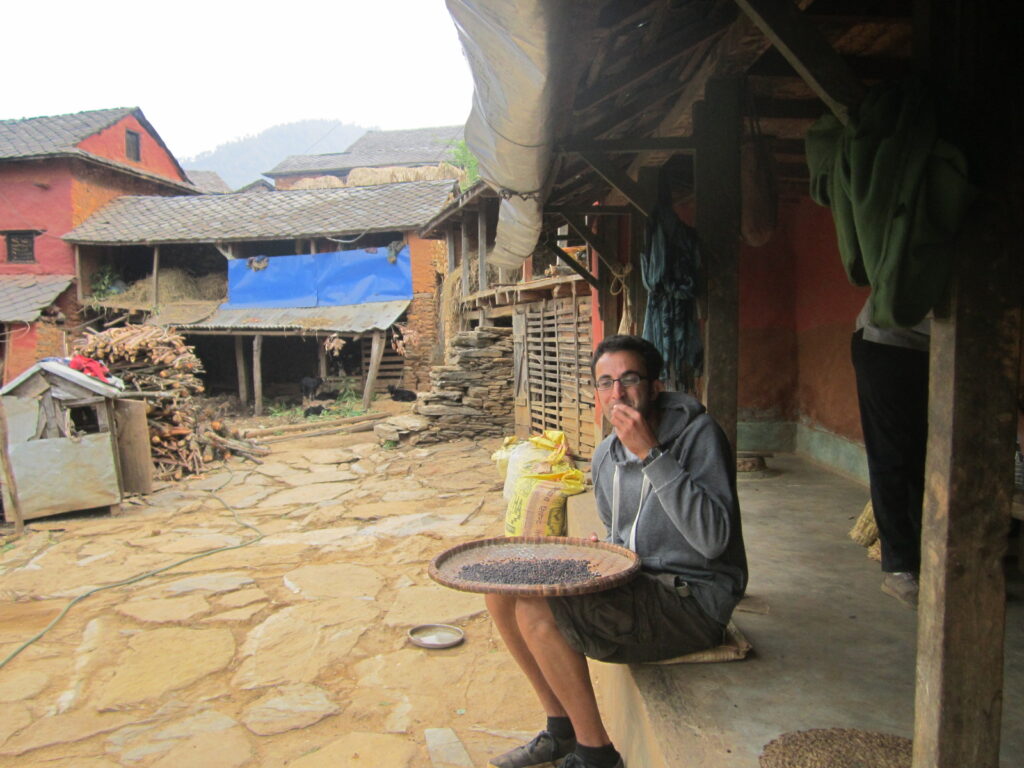
Aathrai, in eastern Nepal, is full of such moments. There’s no single viewpoint that demands a queue of cameras, no attraction announced by a signboard. Instead, the village reveals itself through routines that have never considered themselves remarkable. Someone carries a doko woven from bamboo along a narrow hillside path with the effortless balance acquired over decades. A grandmother kneads millet flour while listening to the day’s conversation drift between generations. Cardamom dries beneath the afternoon sun.
To an outsider, these scenes may appear almost uneventful. That’s precisely their value. Villages have never needed to announce their uniqueness, because their confidence doesn’t come from standing apart — it comes from remaining faithful to the ordinary patterns that sustain daily life.
We often assume meaning resides in exceptional experiences, yet much of human life has always been built from repetition. Rice is cooked every morning. Fields are tended every season. These acts acquire significance not because they’re rare, but because they’re repeated with care. This may explain why so many travellers leave rural places feeling unexpectedly moved, even when very little seemed to happen. They haven’t witnessed extraordinary events. They’ve encountered an ordinary life lived with extraordinary attentiveness.
It’s tempting to describe places like Aathrai as windows into the past, but that misunderstands them entirely. They aren’t preserved relics — they’re living communities negotiating the same questions faced everywhere else, from how to educate children to how to stay connected while the young leave for cities and foreign countries. Their value lies not in resisting change, but in reminding us that progress needn’t require abandoning the practices that have sustained human relationships for generations.
An ordinary life, observed closely enough, is never ordinary at all.
IV
A Day
The first sound isn’t an alarm but the slow stirring of a household already awake. Somewhere beyond the window, a child is splitting dry bamboo with a khukuri for firewood. Footsteps cross the courtyard before disappearing towards the cattle shed. By the time the eastern hills begin to catch the first light, the village has already been awake for an hour.
Breakfast is prepared without ceremony. Fresh chiya is poured into steel cups still warm from the rinse water. A stack of kodo ko roti arrives from the clay griddle, alongside homemade pickle and a bowl of curd. Nobody announces the meal is ready. People simply gather, taking their places as naturally as water finding its level.
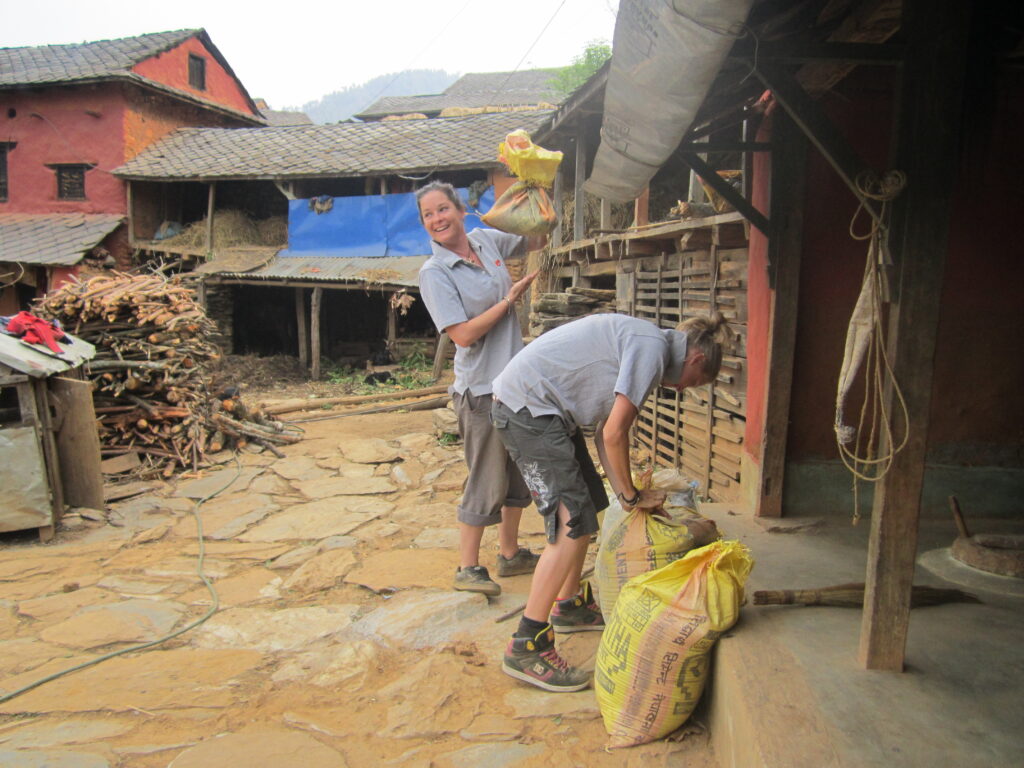
After breakfast, there’s no itinerary waiting on the table. No guide unfolds a map or explains the programme for the day. Instead, someone asks a simple question: “Would you like to come?” The destination is a hillside field where millet is almost ready for harvest. A woven doko is handed over with quiet confidence — no expectation that it will be carried well, only that it will be carried.
Work begins without instruction. The best way to learn, it quickly becomes clear, is to stand beside someone and imitate them. The first attempt is awkward — the doko refuses to balance, the sickle catches more grass than millet. Nobody corrects these mistakes with impatience. Experience is shared through demonstration, not explanation. Before long, conversation returns, not because the work has become easier, but because the body has begun to understand what words never could.
Lunch is eaten where the morning’s work ended — rice, lentils and seasonal vegetables served from shared bowls beneath a broad chilaune tree. Stories move from one generation to another with the same ease as the food: memories of harvests interrupted by storms, of sons and daughters now working in Dubai, Sydney and London who still call home every Saturday evening.
As evening settles over the valley, the pace changes once more. Smoke rises from kitchen fires, cattle return before darkness, and dinner stretches comfortably into the night, followed by tea served long after the plates are cleared. There’s no entertainment planned for visitors, because none is needed. The village has never separated hospitality from ordinary life.
The most memorable evenings rarely have an itinerary.
When the lights are finally switched off, very little has happened that would appear on a conventional itinerary. Yet lying beneath a thick quilt as the sounds of the village dissolve into the night, it becomes difficult to remember the last time an entire day passed without the persistent feeling of needing to be somewhere else.
Tomorrow will begin much the same way. That is precisely the point.
V
Reciprocity
A friendship changes both people in it. So does a good marriage, a good teacher, a good conversation. Travel, oddly, still gets a pass — we arrive, we collect, we leave, and call it a journey. It shouldn’t get to be this one-sided.
Much of modern tourism has been built on a remarkably one-sided idea of exchange. Villages invite a different way of thinking, because they make relationships visible. A conversation interrupted in the morning is continued that evening. A promise to return next season is remembered. To spend time within such a community is to realise that relationships are built not through grand gestures, but through the steady accumulation of ordinary ones.
A traveller who spends an afternoon helping to harvest millet doesn’t change the outcome of the harvest — the work would have been completed regardless. What changes is something less tangible. Labour is no longer a spectacle to admire from a distance; it becomes a shared responsibility, however small the contribution.
Participation isn’t measured by how much work gets done. It’s measured by the willingness to share it.
Reciprocity shouldn’t be confused with charity. Rural communities don’t need visitors to rescue them. Families deserve fair incomes for their hospitality, local guides deserve professional wages for their knowledge. Economic exchange isn’t something to apologise for — it’s essential. The mistake is believing money alone completes the relationship.
Payment can settle an invoice. It cannot create mutual respect.
Respect grows through attention: learning the name of the person who prepared your meal, asking permission before a photograph, recognising that a footpath is part of someone’s daily life before it becomes part of your adventure. When visitors choose locally owned accommodation, eat food grown on nearby terraces, and hire guides who know these hills because they grew up walking them, the value of the journey circulates through the community instead of passing quickly beyond it.
The future of travel will not be determined solely by lighter aircraft or better infrastructure. It will depend on the quality of the relationships we choose to build with the places that receive us.
In the end, reciprocity asks very little of us. Only that we leave behind something more valuable than our footprints.
VI
Belonging
We often speak about belonging as though it were a place — somewhere we might find it, almost by accident, if we search long enough. Yet the journeys that stay with us suggest something quieter.
Belonging is rarely discovered. More often, it is practised.
This may explain why some of the strongest feelings of belonging arrive in places where we remain unmistakably foreign. The mountains won’t become yours simply because you walked among them. And yet, for reasons difficult to explain, there are moments when a place begins to feel less like a destination and more like a relationship — not because you’ve claimed it, but because you’ve stopped asking it to perform for you.
A tourist asks, “What can this place show me?” A participant begins to wonder, “How should I be here?” The first question is driven by curiosity; the second by responsibility. That shift is almost invisible from the outside, but it changes the nature of the journey completely.
Some places are remembered for their landscapes. Others remember you.
This is the invitation at the heart of the Belonging Project. It’s not an invitation to escape modern life or to romanticise rural Nepal as a world untouched by change. Villages are changing, as they always have. Young people leave for universities and opportunities abroad. Roads arrive. What endures isn’t a frozen way of life, but a way of relating to one another that remains grounded in participation rather than performance.
If travel has a future worth believing in, it won’t be defined by ever more exclusive destinations. It will be defined by whether we learn to arrive differently — to travel not as collectors of places but as temporary members of communities.
Belonging, then, is not the end of a journey.
It is the way a journey continues long after we have gone home.
Join the Belonging Project
Not every journey changes you.
Some simply take you somewhere new.
The Belonging Project exists for the ones that do more.
Every Village Quest begins with the same question.
What kind of life would you like to live for a week?
Not what mountain you would like to climb. Not which attractions you would like to visit. But what rhythms you would like to become part of.
Perhaps you’ll spend your mornings helping harvest millet on the hillsides of Aathrai before sharing lunch beneath a chilaune tree. Perhaps you’ll learn to cook alongside three generations of a Limbu family, or sit in a village tea shop where conversations matter more than schedules. Every season brings different work, different festivals, different stories and different people.
No itinerary is fixed because village life isn’t. If something in this essay felt familiar, perhaps you’re already looking for a different way to travel.
We would be honoured to build that journey with you.
Begin Your Village Quest
Live With a Limbu Family Spend a week as a temporary member of a village household, sharing meals, daily work and the quiet rhythms of everyday life. → Explore the Experience
Join a Seasonal Village Life Experience Harvest millet in autumn, pick oranges in winter, help dry cardamom after the rains, or simply live alongside a community as each season unfolds. → Discover Seasonal Journeys
Create Your Own Belonging Journey Tell us how much time you have and the pace at which you’d like to travel. We’ll design a journey around people, places and seasons — not a standard itinerary. → Design My Journey
Not Sure Where to Begin?
Most people aren’t. Start with a conversation. Tell us how many days you’ll be travelling, who you’re travelling with, and the kind of community you’d like to spend time with — we’ll help you design a journey that feels personal from the start.
The Belonging Project is our long-term commitment to designing journeys that place participation before observation, communities before attractions, and relationships before itineraries. Many of these relationships continue through the work of the Warm Hands Foundation, our long-term community initiative in Nepal. Every experience is created alongside the people who call these places home, not simply within them.
First published July 2026 · This journal will continue.