Hidden Nepal — stories that explain Nepal through the people who remember them.
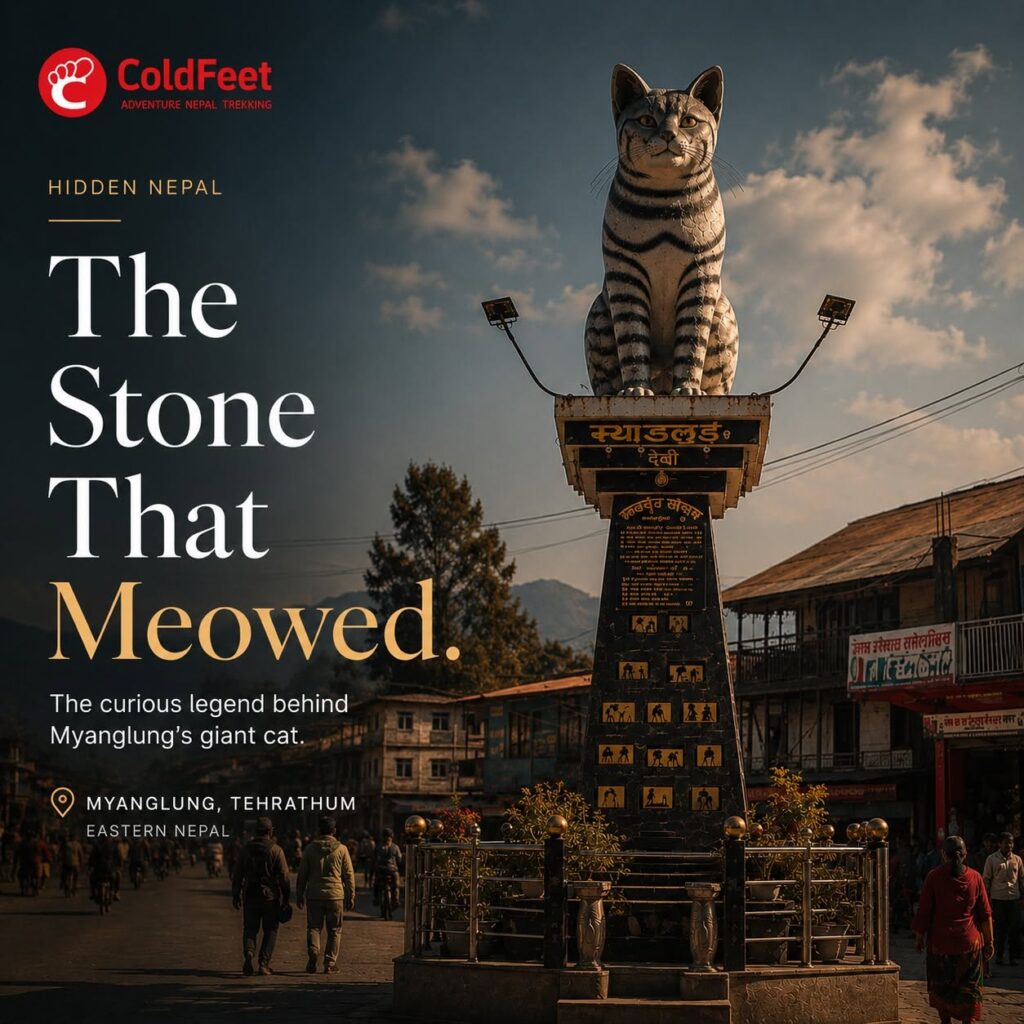
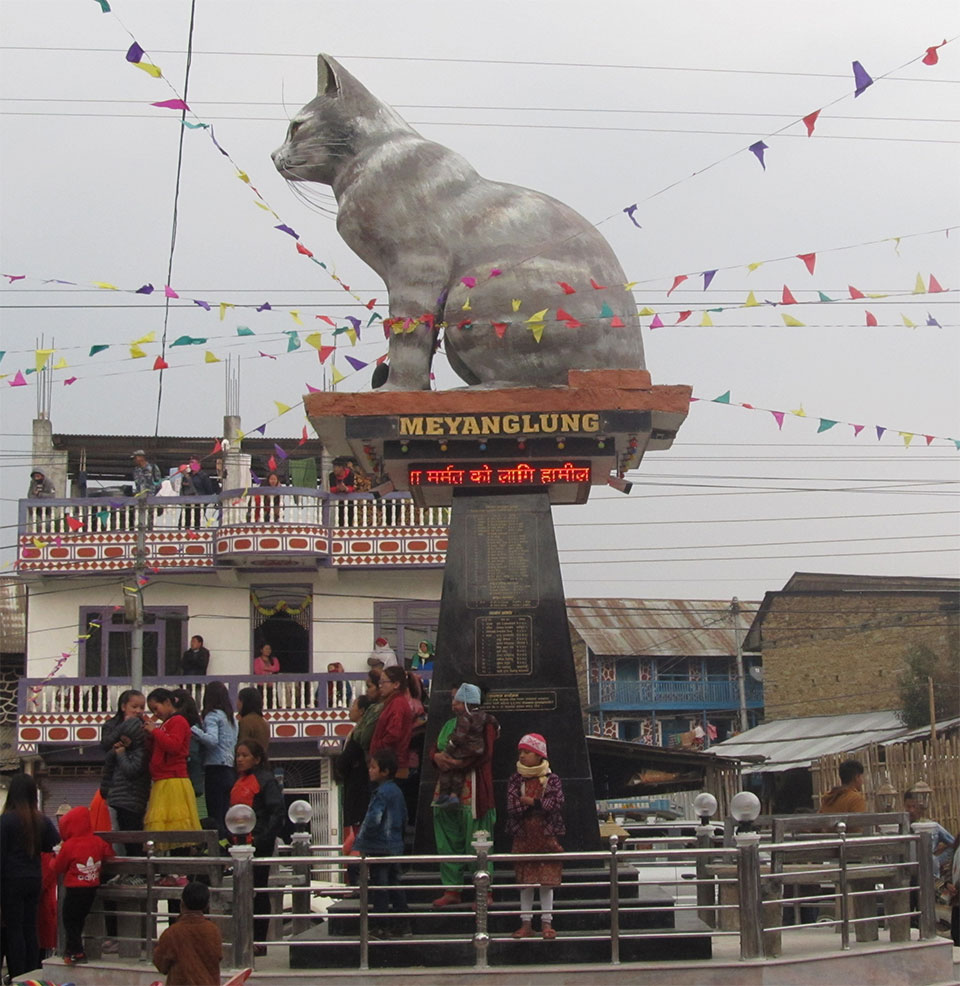
After a two-and-a-half-hour bus ride from Sidhuwa Bazaar in Dhankuta, I expected Myanglung to greet me the way most hill towns do — a bus park, a row of shops, maybe a temple marking the center. Instead there was a giant stone cat sitting above the highway, watching the town unfold beneath it with an expression somewhere between amused and unbothered.
Everyone in town knew there was a story behind it. No two people told it quite the same way.
By evening, someone pointed me to an elderly resident known for his knowledge of local folklore. “It is an old story,” he said. “You can choose for yourself whether to believe it. I believe it from my heart.” Then he told it.
Long before roads reached these hills, porters carried salt, grain and cloth on foot between the plains and the highlands, walking for days at a stretch. One evening, three of them stopped to rest at a chautari — a shaded rest stop built beneath a large tree, common across Nepal’s hills before roads existed, where travelers lowered their loads and news passed from one valley to the next.
Under a peepal tree, the porters built a hearth from a few white stones and lit a fire. One stone shifted on its own. Thinking it unstable, one of the porters struck it with his khukuri. It meowed, then began to bleed. The three fled into the dark.
Villagers who came the next morning found the stone marked with blood. For a while, misfortune and unease were blamed on it. Then one villager reported a dream: a goddess weeping beside the wounded stone, asking that it be worshipped rather than feared. The village placed the stone on a larger rock and began offering prayers. The unease passed, and the settlement came to be called Myanglung — from the Limbu words myaau (cat) and lung (stone).
Whether that’s the historical origin of the name is hard to verify. What’s certain is that the story and the town are now the same thing.
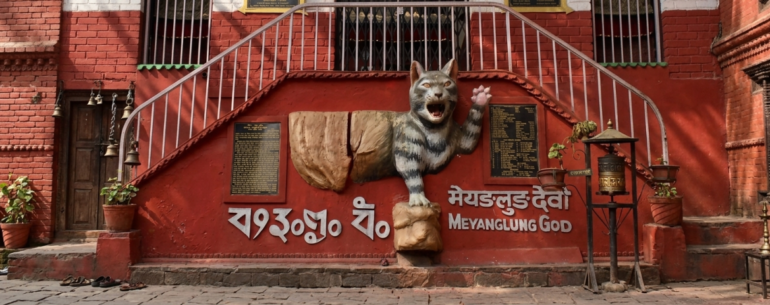
The original chautari is gone. The Meyanglung God Temple stands on the site today, with another stone cat — this one emerging from a split boulder, one paw raised — marking the entrance. Devotees still visit, incense still burns, and the shrine functions as part of daily life rather than a fenced-off relic.
When I later told my grandfather the story, he corrected one detail: “No — the stone didn’t bleed first. It meowed.” I don’t know if that’s the version his grandfather told him, or a detail that changed somewhere along the way. Either is likely. Oral stories like this one aren’t preserved word-for-word — they’re preserved by being told again, with whatever changes each teller remembers.
If you go: Myanglung is the headquarters of Tehrathum district, reachable by bus from Dhankuta (around 2.5 hours from Sidhuwa Bazaar). The temple sits just off the main highway near the town center — hard to miss once you spot the stone cat above the road. Ask a local for their version of the story before you visit the shrine; chances are it won’t match this one exactly, and that’s the point.


Leave a Reply